Agentic Orchestrator
DoorDash open-source TUI that turns large feature requests into checkpointed multi-phase coding-agent workflows across Claude Code, Codex, and OpenCode.
Do not bounce yet
Read the fit check, compare one alternative, then decide whether the vendor page is still your best next click.
Quick Verdict
Fast fit check before you leave the page
Make the fit call first. Vendor pages are good at selling, but they rarely tell you where the product is a bad match.
- Engineers supervising long-running AI coding agents on real repositories
- Teams that want human checkpoints before design, roadmap, phase plan, or publish steps
- Developers comparing Claude Code, Codex, and OpenCode orchestration workflows
- Public adoption is still very early, with low GitHub stars and small HN discussion at the time of review.
- The workflow is intentionally heavyweight, so it may be overkill for small edits where Aider, Claude Code, Codex, or OpenCode alone is faster.
- Real use depends on several external CLIs being installed and authenticated, including git, gh, and at least one agent provider CLI.
Compare Next
Take one more internal step before the vendor pitch
This is where visitors usually jump out too early. Read one deeper take or open one alternative so the next click is informed instead of impulsive.
Alternative profile
Mux
Open-source desktop and browser coding-agent multiplexer for running parallel AI agents across isolated local, worktree, and SSH workspaces.
Alternative profile
cmux
Native macOS terminal for running parallel AI coding agents with vertical tabs, browser splits, SSH workspaces, and attention-aware notifications.
Alternative profile
HumanLayer
Open-source IDE and orchestration layer for AI coding agents, built around keyboard-first Claude Code workflows, parallel sessions, and team-scale context engineering.
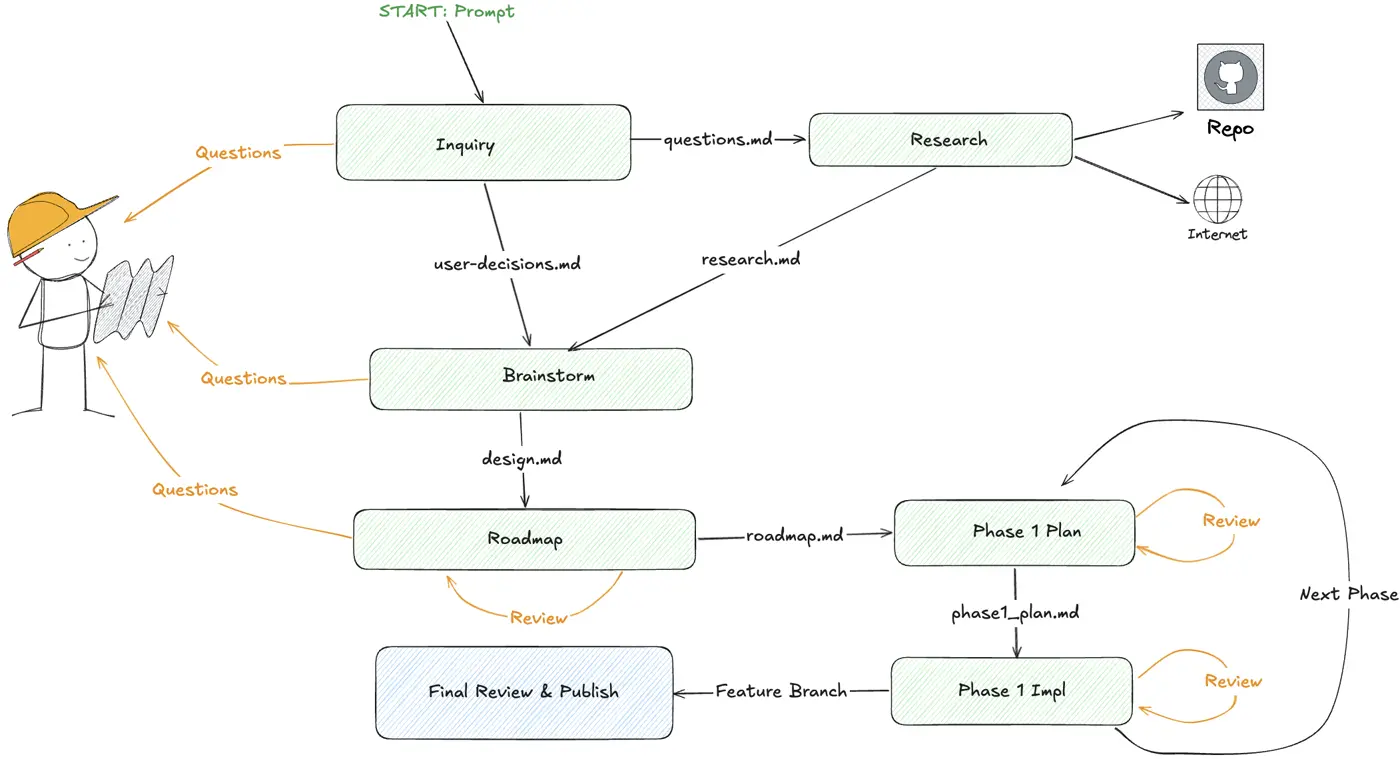
Agentic Orchestrator is for developers who have learned that the risky part of AI coding is not getting a model to edit files. The risk is losing context, skipping design work, accepting a weak plan, and ending up with a huge diff nobody trusts. DoorDash's open-source agentico TUI turns large feature prompts into a stateful workflow with research, planning, implementation, final review, and PR publishing around the agent work.
Agentic Orchestrator is DoorDash's open-source terminal workflow manager for developers who want coding agents to produce reviewable pull requests without skipping the engineering process. The local CLI, agentico, turns a high-level feature request into a stateful lifecycle with knowledge-base building, clarification, research, design, roadmap planning, phase planning, implementation, final review, and publishing. It isolates work in git worktrees, supports single- and multi-repository features, can run several workflows in parallel, and treats Claude Code, Codex, and OpenCode as provider backends that can be selected per phase. That makes it a serious entry for vibe-coding teams evaluating agent orchestration, human checkpoints, and PR-oriented automation rather than another prompt wrapper.
Why Choose Agentic Orchestrator?
Choose Agentic Orchestrator when the goal is a reviewable feature PR, not a one-off chat session that happens to edit code.
Its knowledge-base, inquiry, research, design, roadmap, phase planning, implementation, and final review stages make it useful for ambiguous or high-risk feature work.
Worktree isolation and multi-repo support matter when several agent workflows need to run concurrently without corrupting the main checkout.
Because Claude Code, Codex, and OpenCode can each back different phases, teams can route planning, implementation, and review to the provider that fits the job.
Key Features
Turns one feature prompt into a checkpointed lifecycle covering knowledge-base build, inquiry, research, design, roadmap, phase planning, implementation, final review, and publishing.
Runs features in isolated git worktrees so concurrent agent workflows do not mutate the main checkout or collide with each other.
Supports Medium, Large, and Moonshot pipeline profiles, with deeper research and plan validation for ambiguous or high-risk work.
Uses specialized reviewers for architecture, structure, scope, security, performance, and testing when the selected profile and risk level call for them.
Treats Claude Code, Codex, and OpenCode as provider backends, with per-phase model choices for clarification, research, planning, implementation, review, utilities, and KB builds.
Publishes reviewable pull requests through the GitHub CLI, including cross-repo PR references when a feature spans more than one repository.
Pros & Cons
- Agentic Orchestrator is aimed at the hard part of AI coding: preserving context, forcing design checkpoints, and getting to a reviewable PR instead of only generating edits.
- The DoorDash OSS provenance and detailed README make it more credible than a thin weekend wrapper, even though public adoption is still early.
- Worktree isolation, multi-repo support, phase artifacts, and final review loops map closely to how serious engineering teams already manage risky feature work.
- Provider orchestration across Claude Code, Codex, and OpenCode gives teams room to assign different models to different phases instead of betting the whole workflow on one CLI.
- Public adoption is still very early, with low GitHub stars and small HN discussion at the time of review.
- The workflow is intentionally heavyweight, so it may be overkill for small edits where Aider, Claude Code, Codex, or OpenCode alone is faster.
- Real use depends on several external CLIs being installed and authenticated, including git, gh, and at least one agent provider CLI.
- Current release assets are centered on macOS and Linux, so Windows users should treat support as source-build or indirect until the project documents a cleaner path.
Detailed Use Cases for Agentic Orchestrator
Use Agentic Orchestrator when a feature should move through research, design, planning, implementation, review, and publish rather than a single unstructured edit session.
The CLI fits teams that want multiple agent workflows active at once while keeping each feature in its own branch, worktree, and artifact trail.
Inquiry, research, design, roadmap, phase plan, user-input, and publish gates let engineers approve direction before agent work gets expensive.
Agentic Orchestrator is useful when Claude Code, Codex, or OpenCode should be assigned per phase instead of choosing one agent CLI for every part of the workflow.
Who Should Use Agentic Orchestrator?
Engineers supervising long-running AI coding agents on real repositories
Teams that want human checkpoints before design, roadmap, phase plan, or publish steps
Developers comparing Claude Code, Codex, and OpenCode orchestration workflows
Engineering leads evaluating PR-oriented automation instead of simple coding-agent wrappers
Perfect For
Running several long-lived coding-agent feature workflows in parallel without mixing branches, worktrees, or session state.
Turning vague product or engineering requests into researched designs, roadmaps, phase plans, implementation diffs, and PRs.
Adding explicit human approval gates before expensive implementation or publishing steps.
Coordinating multi-repository feature work where pull requests need cross-links and shared rollout context.
Technical Details
Agentic Orchestrator Comparisons & Alternatives
Agentic Orchestrator review
agentico TUI review
Agentic Orchestrator vs Mux
Agentic Orchestrator vs Vibe Kanban
DoorDash coding agent orchestrator
long-running coding agent workflow
Developers compare Agentic Orchestrator with other vibe coding tools when they need a better workflow fit, not just a better landing page.
Direct Competitors
Mux
cmux
Vibe Kanban
Open SWE
HumanLayer
Similar Tools You Might Like

Community Codex CLI fork that adds Auto Drive orchestration, background Auto Review, browser/CDP integration, theming, and multi-agent commands.
Open-source meta-harness for running, governing, sharing, and switching between coding agents like Claude Code, Codex, Cursor, OpenCode, Hermes, and Pi.
Lightweight open-source coding-agent harness shipped as a single Go binary with TUI, headless, MCP, extension, and Telegram workflows.
Alternative Tools to Consider
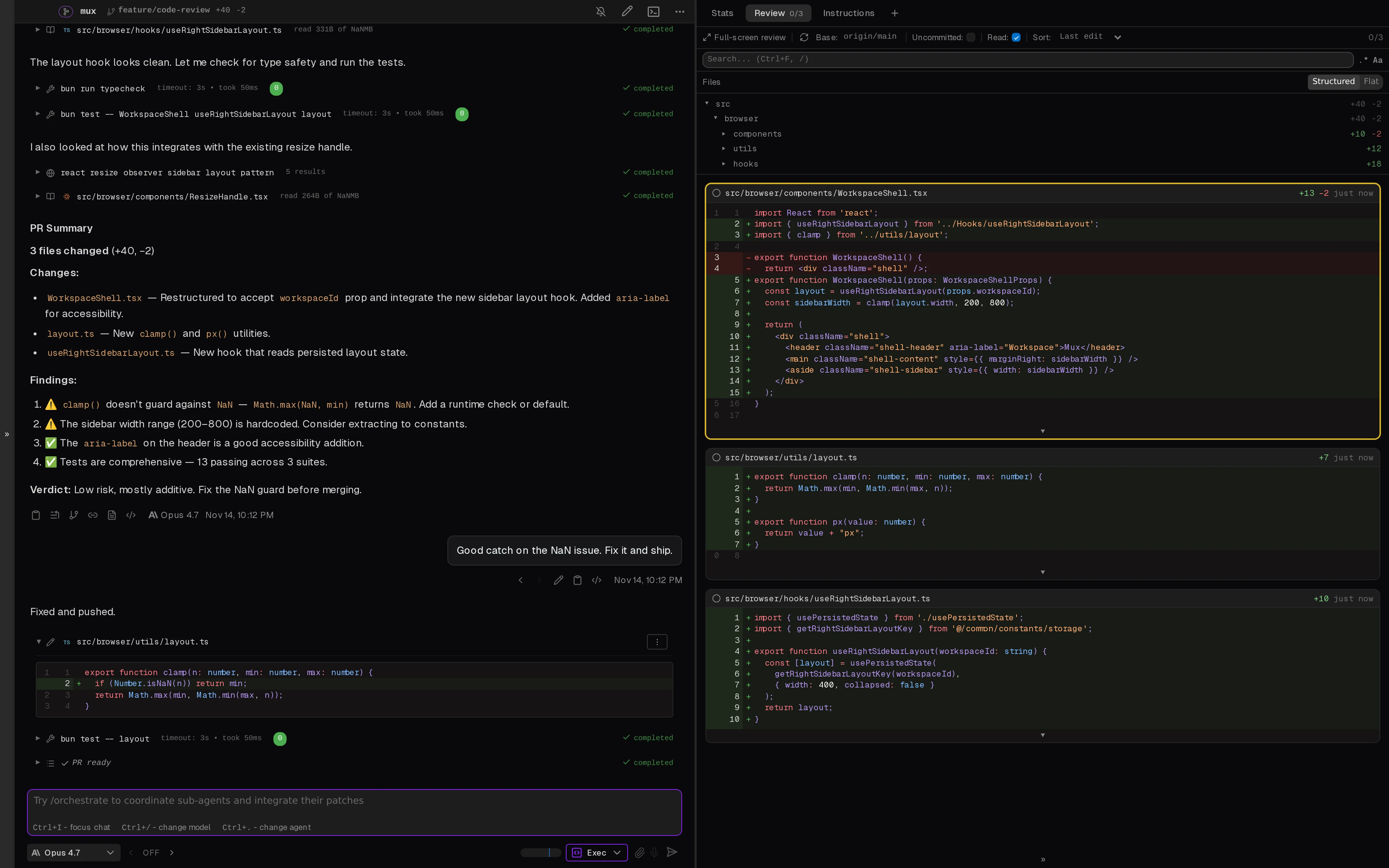
Open-source desktop and browser coding-agent multiplexer for running parallel AI agents across isolated local, worktree, and SSH workspaces.

Native macOS terminal for running parallel AI coding agents with vertical tabs, browser splits, SSH workspaces, and attention-aware notifications.

Open-source IDE and orchestration layer for AI coding agents, built around keyboard-first Claude Code workflows, parallel sessions, and team-scale context engineering.

Open-source asynchronous coding-agent framework for turning issues and threads into sandboxed engineering runs and reviewable pull requests.
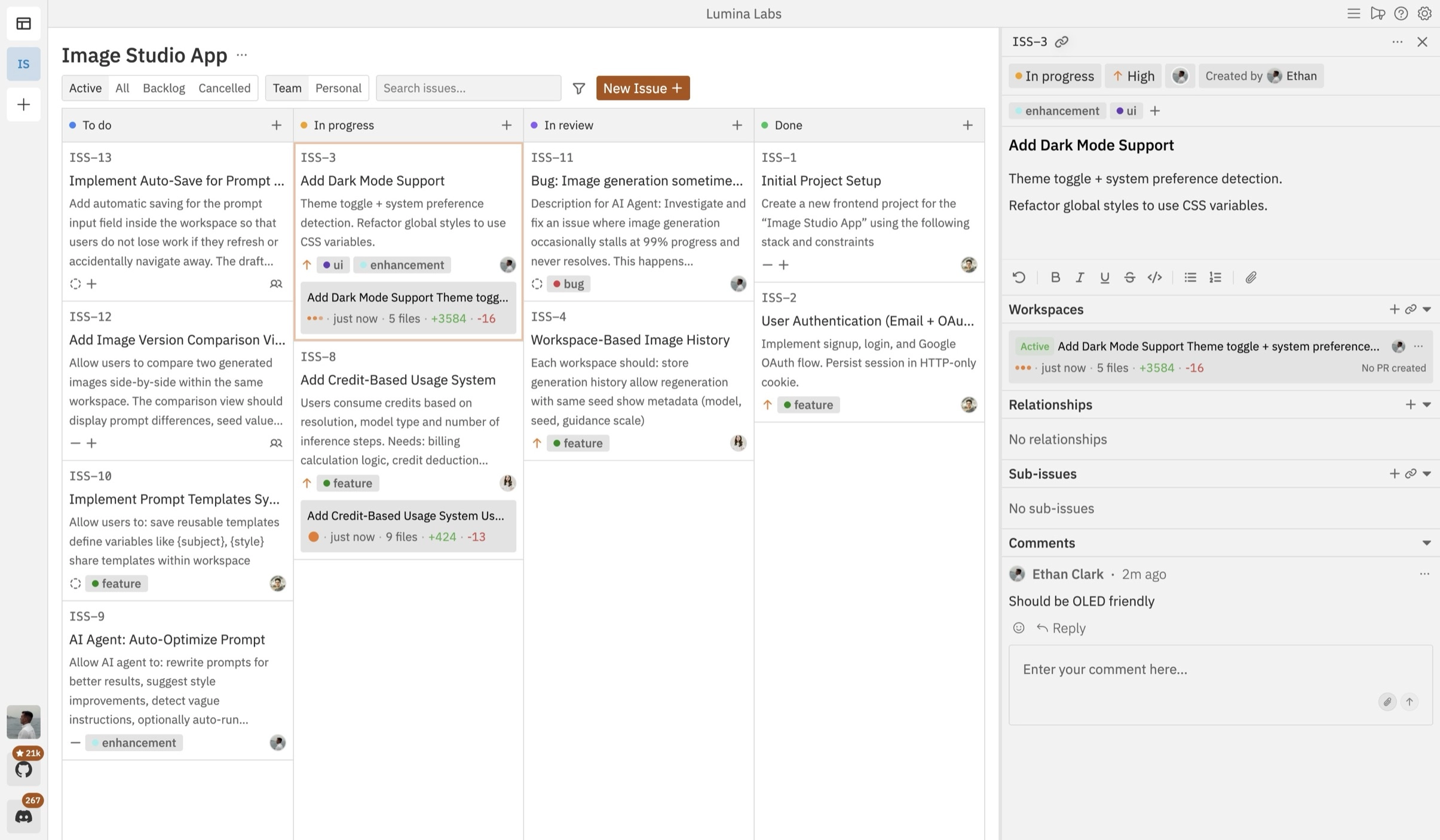
Open-source Kanban control plane for planning, running, and reviewing multiple coding agents across isolated workspaces.
Do one more comparison before you commit to Agentic Orchestrator
Strong picks usually survive one more internal check. Read deeper, compare a neighbor, then leave for the vendor page if the fit still holds.