Vibe Kanban
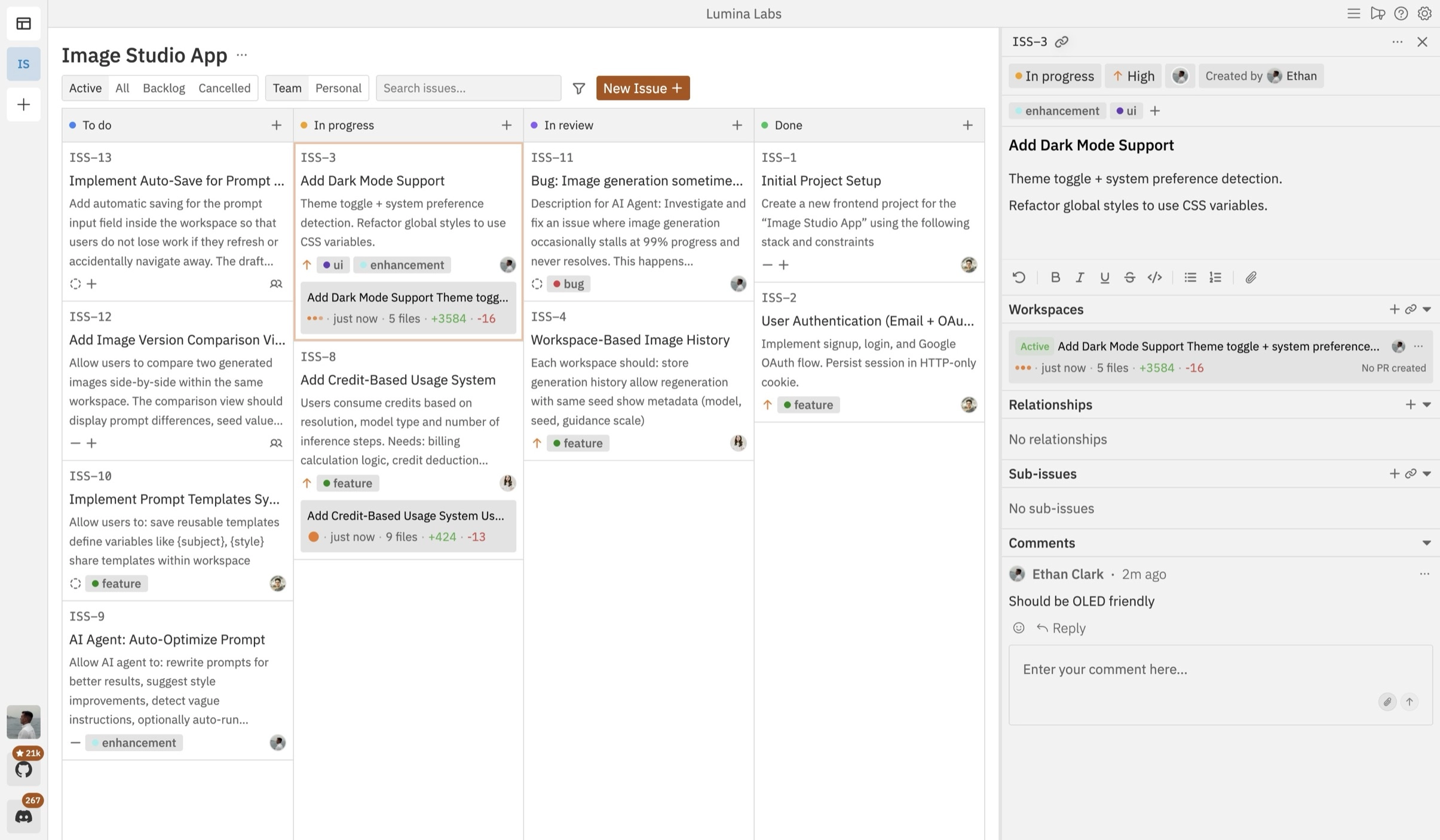
Open-source Kanban control plane for planning, running, and reviewing multiple coding agents across isolated workspaces.
Do not bounce yet
Read the fit check, compare one alternative, then decide whether the vendor page is still your best next click.
Quick Verdict
Fast fit check before you leave the page
Make the fit call first. Vendor pages are good at selling, but they rarely tell you where the product is a bad match.
- Developers already using coding agents who now need better planning and review than one local terminal provides
- Teams comparing orchestration layers like Parallel Code, Paseo, or browser-based control planes for multi-agent work
- Builders who want a shared board for issues, workspaces, previews, and PR handoff around agent-generated code
- The company behind Vibe Kanban has shut down, so teams should treat roadmap continuity and support expectations realistically even though the project remains open source and community maintained.
- You still need upstream coding-agent installs, credentials, and model budgets; Vibe Kanban coordinates them, it does not remove those dependencies.
- A planning-and-review control plane is more process-heavy than using one agent in one shell, so it is overkill for tiny solo edits.
Compare Next
Take one more internal step before the vendor pitch
This is where visitors usually jump out too early. Read one deeper take or open one alternative so the next click is informed instead of impulsive.
Alternative profile
Claude Squad
Open-source terminal app for managing multiple AI coding agents like Claude Code, Codex, OpenCode, and Aider across isolated workspaces.
Alternative profile
Paseo
Self-hosted cross-device control layer for Claude Code, Codex, Copilot, OpenCode, and Pi across web, desktop, mobile, and CLI.
Alternative profile
Parallel Code
Open-source desktop workspace for running multiple AI coding agents in parallel across isolated git worktrees.
Vibe Kanban matters because it is aimed at the bottleneck most coding-agent demos try to ignore. Once agents can code in parallel, the human constraint shifts upward into planning, prioritization, review, and merge discipline. Vibe Kanban turns that bottleneck into the product: a board for organizing work, launching agent tasks, reviewing diffs, and shipping changes without pretending another single-thread chat box solves team coordination.
Vibe Kanban is a local-first orchestration layer for developers who have already learned that the bottleneck in agentic coding is not only generation, but planning and review. It gives each coding agent its own workspace, branch, terminal, and dev server, wraps the work in a Kanban board with issues and sub-issues, and adds inline diff review, previews, and GitHub PR flows. The big caveat matters: the company behind it has shut down and the project is now community maintained, but the open-source repo, live docs, and public usage signals are still strong enough to justify inclusion.
Why Choose Vibe Kanban?
Choose Vibe Kanban if your real problem is not generating one patch, but coordinating several coding agents without turning branches, prompts, and review steps into garbage.
Its board-plus-workspace model is more useful than generic wrappers because it ties planning, execution, preview, and review into one workflow.
Support for Claude Code, Codex, Gemini CLI, OpenCode, and other agents is strategically valuable in a market where the best harness changes every few months.
Do not ignore the caveat: the company behind the project shut down, so the value proposition is strongest for teams comfortable with open-source, community-maintained tools.
Key Features
Runs multiple coding agents in parallel from one Kanban-style control plane, with each workspace getting its own branch, terminal, and dev server instead of collapsing everything into one chat thread.
Combines planning and execution: issues and sub-issues live on the board, then you can hand work directly to Claude Code, Codex, Gemini CLI, OpenCode, Qwen Code, Amp, and other supported agents.
Inline diff review and feedback loops matter here: reviewers can inspect changes, leave comments, and push the agent back toward fixes without dropping into a separate patch-review ritual.
Built-in preview and QA flows let you run dev servers, inspect the app, and review changes in context instead of pretending raw diffs alone are enough for UI-heavy work.
The project is Apache-2.0 open source and still ships live docs, npm install paths, and self-hosting guidance even after the company shutdown announcement.
Official positioning is explicitly anti-lock-in: the tool is meant to sit above changing coding-agent SOTA rather than forcing you to bet on one harness forever.
Pros & Cons
- Vibe Kanban attacks a real bottleneck in agentic coding: human planning and review, not just code generation speed.
- Its multi-agent workspace model is more operationally mature than the usual wrapper that just opens one more terminal pane and calls it orchestration.
- Support for several major coding agents is strategically strong because the best underlying harness will keep changing.
- The combination of GitHub traction, live docs, Show HN proof, and public user references makes it much more credible than launch-week orchestration demos.
- The company behind Vibe Kanban has shut down, so teams should treat roadmap continuity and support expectations realistically even though the project remains open source and community maintained.
- You still need upstream coding-agent installs, credentials, and model budgets; Vibe Kanban coordinates them, it does not remove those dependencies.
- A planning-and-review control plane is more process-heavy than using one agent in one shell, so it is overkill for tiny solo edits.
- Parallel agent workflows can create review debt fast if the human operator is sloppy or uses the board as an excuse to spray work everywhere.
Detailed Use Cases for Vibe Kanban
Use Vibe Kanban when one coding agent in one shell leaves too much idle time. The board and workspace model let you break work apart, run several streams in parallel, and switch attention to whichever result is ready for review.
Vibe Kanban is a good fit when your team needs inline diff review, comments back to the agent, previews, and PR handoff instead of trusting generated code after the first pass.
Because the product is built around switching among major coding agents rather than marrying one forever, it is useful for teams that want workflow stability even while the model stack keeps changing.
The project has meaningful traction and a still-live open-source footprint, but the shutdown announcement changes the operating assumption: treat it as a capable community-maintained tool, not a guaranteed long-term SaaS vendor.
Who Should Use Vibe Kanban?
Developers already using coding agents who now need better planning and review than one local terminal provides
Teams comparing orchestration layers like Parallel Code, Paseo, or browser-based control planes for multi-agent work
Builders who want a shared board for issues, workspaces, previews, and PR handoff around agent-generated code
Practitioners comfortable adopting an open-source tool with real traction but a post-shutdown community-maintained future
Perfect For
Run several coding agents in parallel without hand-rolling worktrees, branch isolation, and review plumbing yourself.
Give a team a shared planning and review board for agent-generated work instead of scattering tasks across chat threads and local terminals.
Review UI-heavy or multi-file agent changes with previews, inline comments, and workspace context before opening a pull request.
Stay flexible across Claude Code, Codex, Gemini CLI, OpenCode, and similar tools while the underlying model and harness landscape keeps shifting.
Technical Details
Vibe Kanban Comparisons & Alternatives
Vibe Kanban review
Vibe Kanban vs Parallel Code
Vibe Kanban vs Paseo
Kanban board for coding agents
multi agent coding workflow tool
open source coding agent orchestration
Developers compare Vibe Kanban with other vibe coding tools when they need a better workflow fit, not just a better landing page.
Direct Competitors
Parallel Code
Paseo
Circus Chief
Claude Squad
Similar Tools You Might Like

Open-source platform for running and automating sandboxed coding agents with credential-brokered integrations and snapshot-based sessions.

Open-source asynchronous coding-agent framework for turning issues and threads into sandboxed engineering runs and reviewable pull requests.

Self-hosted cross-device control layer for Claude Code, Codex, Copilot, OpenCode, and Pi across web, desktop, mobile, and CLI.
Alternative Tools to Consider

Open-source terminal app for managing multiple AI coding agents like Claude Code, Codex, OpenCode, and Aider across isolated workspaces.
Self-hosted cross-device control layer for Claude Code, Codex, Copilot, OpenCode, and Pi across web, desktop, mobile, and CLI.
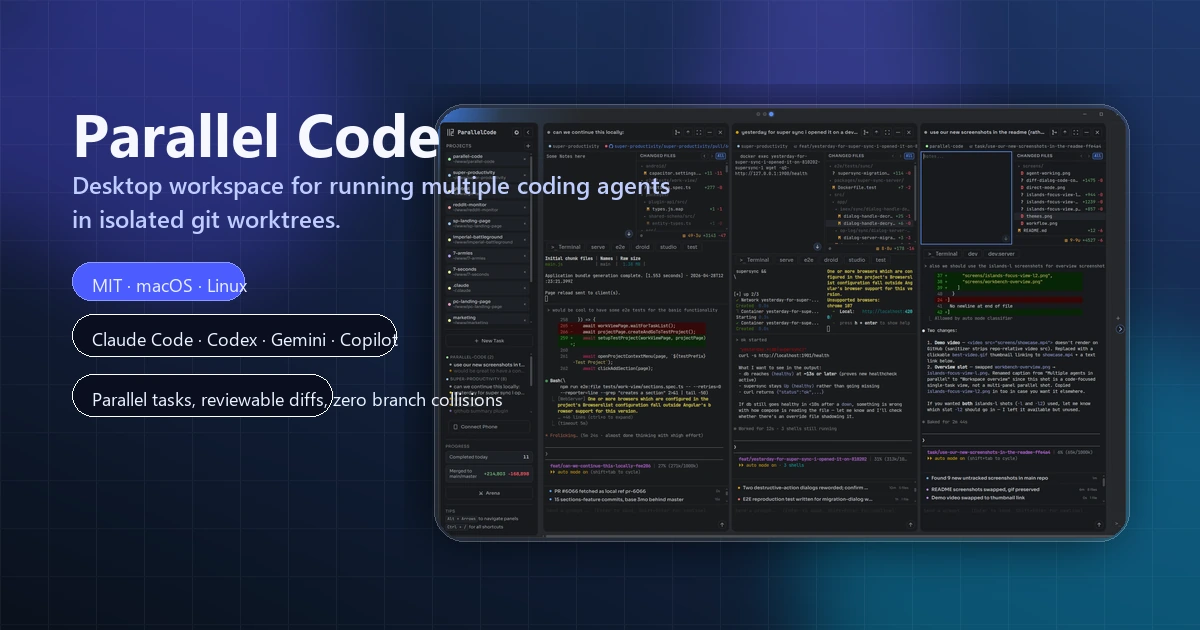
Open-source desktop workspace for running multiple AI coding agents in parallel across isolated git worktrees.
Do one more comparison before you commit to Vibe Kanban
Strong picks usually survive one more internal check. Read deeper, compare a neighbor, then leave for the vendor page if the fit still holds.