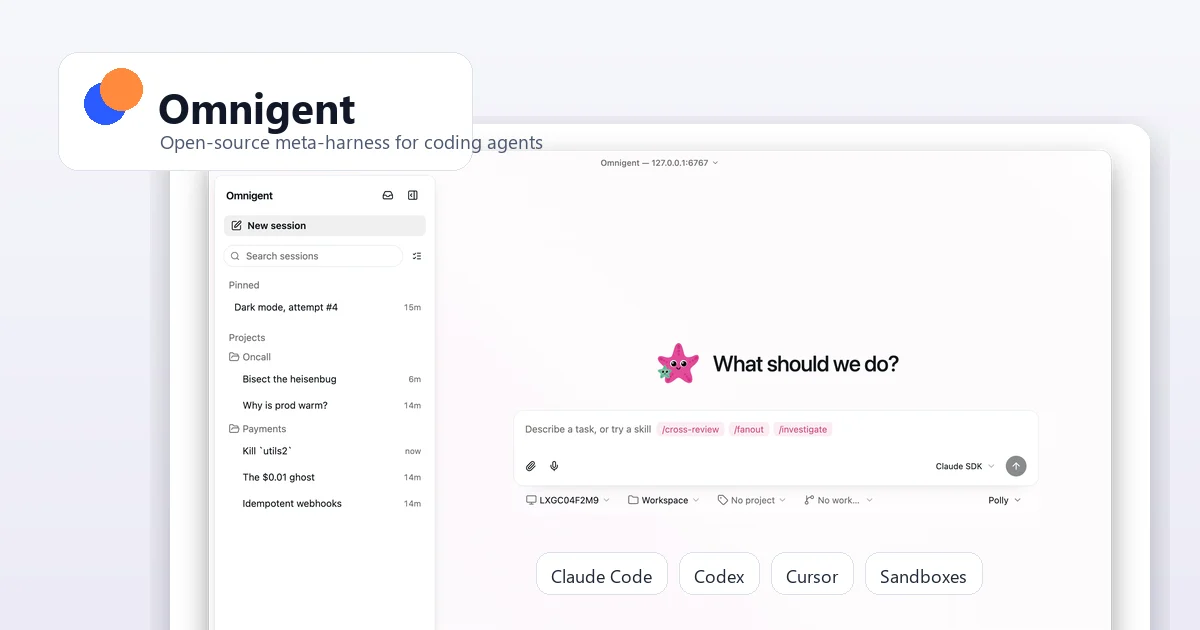
Omnigent
Open-source meta-harness for running, governing, sharing, and switching between coding agents like Claude Code, Codex, Cursor, OpenCode, Hermes, and Pi.
Do not bounce yet
Read the fit check, compare one alternative, then decide whether the vendor page is still your best next click.
Quick Verdict
Fast fit check before you leave the page
Make the fit call first. Vendor pages are good at selling, but they rarely tell you where the product is a bad match.
- Developers and teams already using Claude Code, Codex, Cursor, OpenCode, Hermes, Pi, or custom coding agents
- Agent power users who want shared sessions, phone or browser access, and cross-agent supervision
- Platform teams experimenting with policy controls, approvals, and sandboxed execution for coding-agent workflows
- The project is still marked alpha, so teams should expect churn in APIs, harness support, and deployment expectations
- Windows support is documented as degraded: the server, web UI, and SDK harnesses work, but native tmux/PTY wrappers and stronger sandboxing are not available there
- Omnigent coordinates coding agents; it does not remove the need to review diffs, manage credentials, or understand the behavior of each underlying harness
Compare Next
Take one more internal step before the vendor pitch
This is where visitors usually jump out too early. Read one deeper take or open one alternative so the next click is informed instead of impulsive.
Alternative profile
Claude Squad
Open-source terminal app for managing multiple AI coding agents like Claude Code, Codex, OpenCode, and Aider across isolated workspaces.
Alternative profile
Superset
Worktree-based macOS editor for running and reviewing multiple CLI coding agents like Claude Code, Codex, Gemini CLI, and OpenCode in parallel.
Alternative profile
Vibe Kanban
Open-source Kanban control plane for planning, running, and reviewing multiple coding agents across isolated workspaces.
Omnigent is worth watching because the coding-agent market is moving from single-agent tools to operator layers. If you already use Claude Code, Codex, Cursor, OpenCode, Hermes, or Pi, the annoying problem is no longer whether an agent can edit a file. The problem is how to coordinate sessions, share work with teammates, enforce approval gates, and move between local and cloud execution without building custom glue every time. Omnigent attacks that layer directly.
Omnigent is a serious entrant in the emerging meta-harness layer for coding agents: it does not try to be one more model-branded chat box, it gives developers a shared orchestration surface over the agents they already use. The project wraps Claude Code, Codex, Cursor, OpenCode, Hermes, Pi, and custom YAML-defined agents behind one CLI/server/web UI, then adds live session sharing, policy gates, cost and tool limits, sub-agent delegation, and cloud sandbox backends. The caveat is that Omnigent is still alpha and operationally ambitious, so teams should treat it as agent infrastructure to evaluate carefully, not a mature replacement for reviewing diffs, secrets, permissions, and cloud runtime costs.
Why Choose Omnigent?
Choose Omnigent if you already run multiple coding agents and want one open-source orchestration layer instead of a pile of separate terminal sessions and ad hoc scripts.
Choose it when shared live sessions, policy gates, sub-agent delegation, and cloud sandbox options matter more than a single-vendor assistant interface.
It is especially interesting for teams that want to inspect and self-host the coordination layer rather than hand all agent workflow state to a proprietary dashboard.
Do not choose it casually if you need a boring, mature desktop IDE today; Omnigent is still alpha infrastructure and should be evaluated with real repo, security, and cost constraints.
Key Features
Meta-harness layer for Claude Code, Codex, Cursor, OpenCode, Hermes, Pi, and custom YAML-defined agents
Local CLI and server workflow with a synchronized browser UI, phone-friendly access, and a macOS desktop app
Shared sessions so teammates can watch, chat with, co-drive, or fork an active coding-agent run
Sub-agent orchestration for delegating work across multiple coding agents and routing review to another harness
Policy controls for approvals, tool access, model spend, and governance boundaries across a server, agent, or chat
Cloud sandbox integrations for disposable remote agent environments alongside local terminal workflows
Pros & Cons
- Targets the real operational problem in agent-heavy coding: coordinating several capable tools without rewriting every workflow for one vendor
- The product surface is more concrete than a README-only concept, with CLI, web UI, desktop app, install scripts, releases, and active issue/PR traffic
- Open-source Apache-2.0 licensing makes it easier to inspect, self-host, and adapt than proprietary orchestration dashboards
- Policy and sandbox framing are useful because multi-agent coding gets risky quickly without explicit approvals and containment
- The project is still marked alpha, so teams should expect churn in APIs, harness support, and deployment expectations
- Windows support is documented as degraded: the server, web UI, and SDK harnesses work, but native tmux/PTY wrappers and stronger sandboxing are not available there
- Omnigent coordinates coding agents; it does not remove the need to review diffs, manage credentials, or understand the behavior of each underlying harness
- Real cost depends on connected model providers, subscriptions, and cloud sandbox backends, not just Omnigent itself
Detailed Use Cases for Omnigent
Use Omnigent when Claude Code, Codex, Cursor, OpenCode, Hermes, Pi, or custom agents need to coexist without every workflow being rewritten around one harness.
Omnigent sessions can be followed from terminal, browser, phone, or desktop surfaces, which makes it useful for review, co-driving, and handoff-heavy workflows.
Policy controls for approvals, spend, and tool access matter once agents can run commands, modify files, and touch real project infrastructure.
Omnigent can route work across sub-agents, making it a fit for workflows where one agent plans, another implements, and a different vendor reviews the result.
Who Should Use Omnigent?
Developers and teams already using Claude Code, Codex, Cursor, OpenCode, Hermes, Pi, or custom coding agents
Agent power users who want shared sessions, phone or browser access, and cross-agent supervision
Platform teams experimenting with policy controls, approvals, and sandboxed execution for coding-agent workflows
Researchers and builders comparing meta-harnesses for multi-agent software engineering workflows
Perfect For
Run Claude Code, Codex, Cursor, OpenCode, Hermes, or Pi sessions behind one shared orchestration layer
Let teammates watch or co-drive an active agent session from a browser or phone without losing terminal context
Create policy gates for risky coding-agent actions before moving from solo experimentation to team workflows
Experiment with sub-agent delegation where one agent plans, others implement, and another reviews the diff
Technical Details
Omnigent Comparisons & Alternatives
Omnigent review
Omnigent vs Superset
Omnigent vs Vibe Kanban
meta-harness for coding agents
Claude Code Codex orchestration
open-source coding agent harness
Developers compare Omnigent with other vibe coding tools when they need a better workflow fit, not just a better landing page.
Direct Competitors
Superset
Vibe Kanban
Claude Squad
SWE-ReX
Similar Tools You Might Like

Community Codex CLI fork that adds Auto Drive orchestration, background Auto Review, browser/CDP integration, theming, and multi-agent commands.
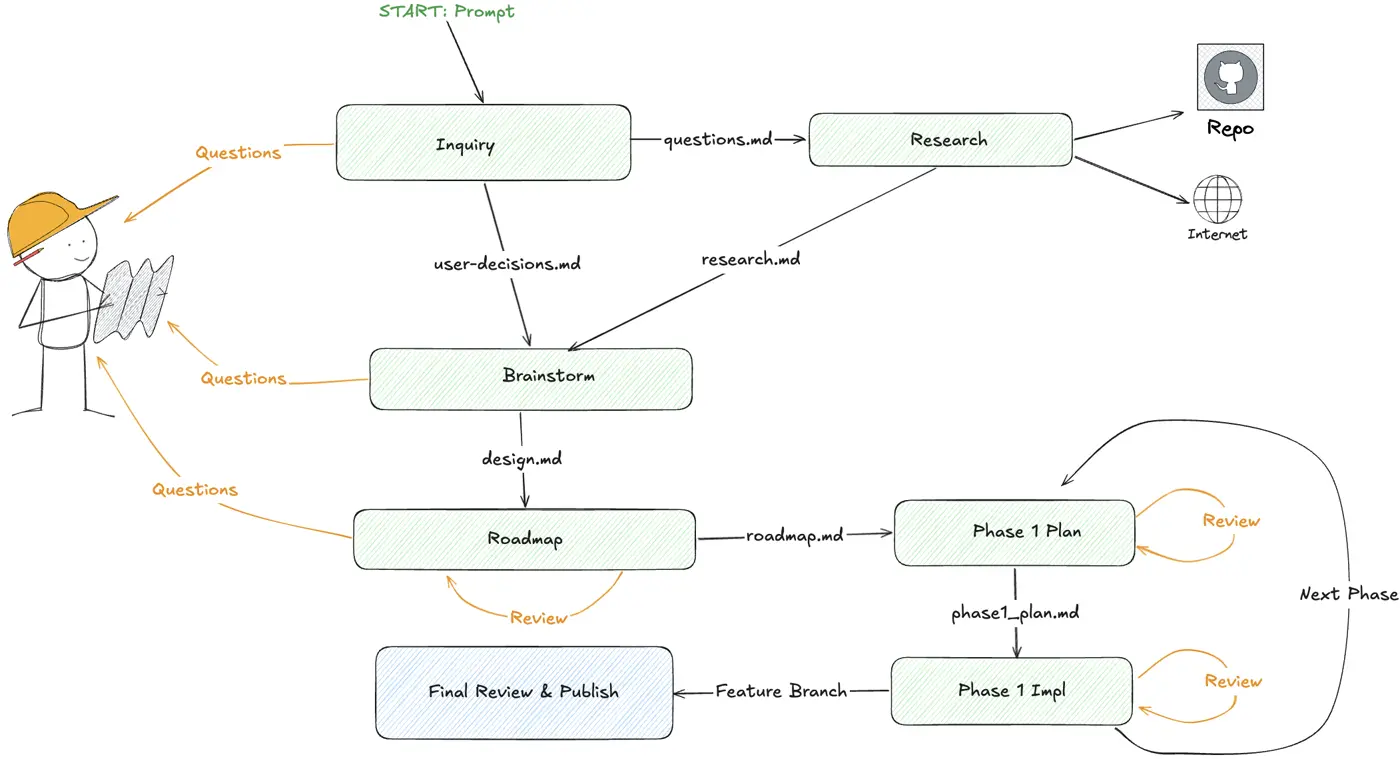
DoorDash open-source TUI that turns large feature requests into checkpointed multi-phase coding-agent workflows across Claude Code, Codex, and OpenCode.
Lightweight open-source coding-agent harness shipped as a single Go binary with TUI, headless, MCP, extension, and Telegram workflows.
Alternative Tools to Consider

Open-source terminal app for managing multiple AI coding agents like Claude Code, Codex, OpenCode, and Aider across isolated workspaces.

Worktree-based macOS editor for running and reviewing multiple CLI coding agents like Claude Code, Codex, Gemini CLI, and OpenCode in parallel.
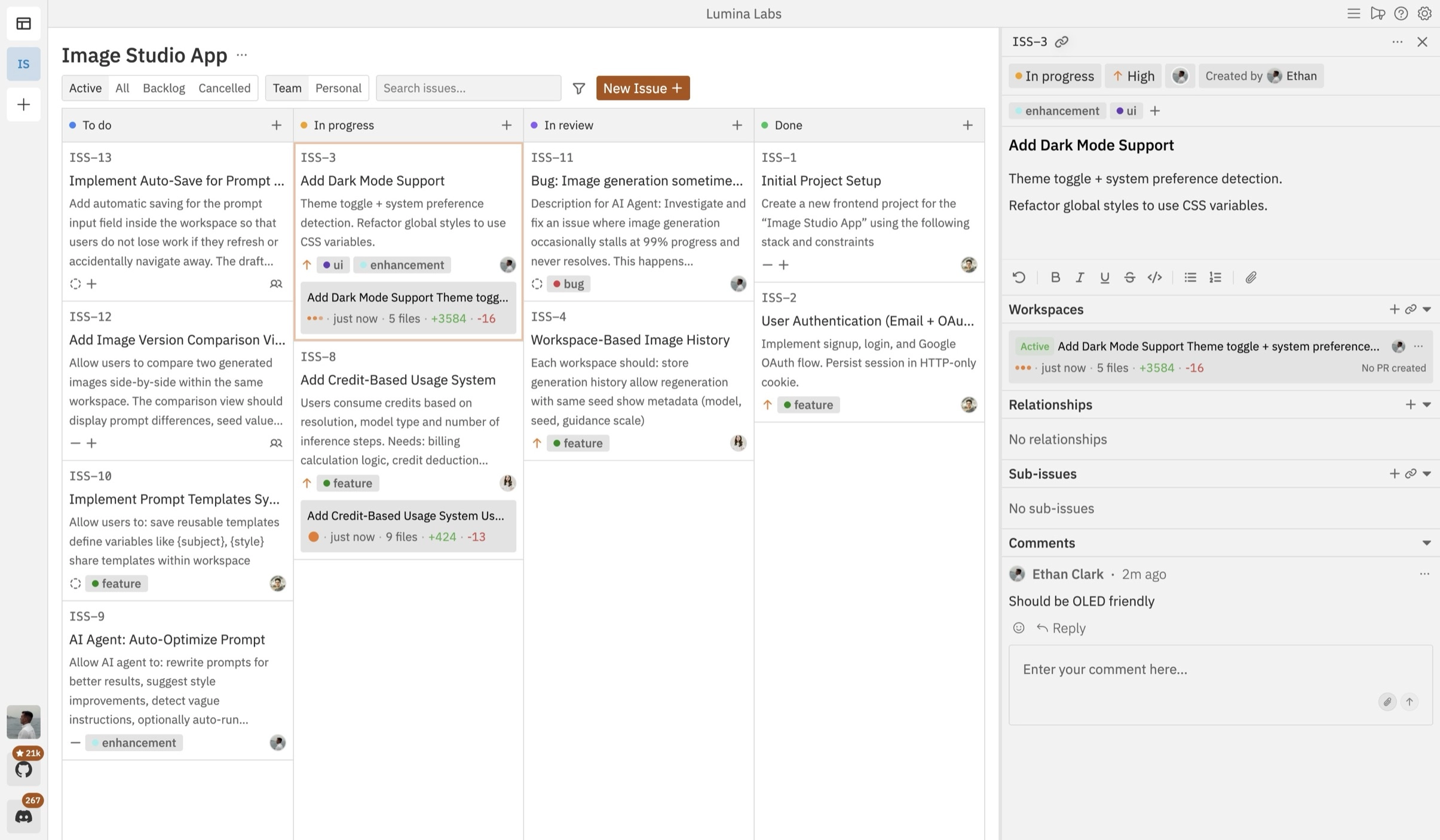
Open-source Kanban control plane for planning, running, and reviewing multiple coding agents across isolated workspaces.

Open-source sandboxed execution layer for coding agents that need local or cloud shell environments at scale.
Do one more comparison before you commit to Omnigent
Strong picks usually survive one more internal check. Read deeper, compare a neighbor, then leave for the vendor page if the fit still holds.