Zot
Lightweight open-source coding-agent harness shipped as a single Go binary with TUI, headless, MCP, extension, and Telegram workflows.
Do not bounce yet
Read the fit check, compare one alternative, then decide whether the vendor page is still your best next click.
Quick Verdict
Fast fit check before you leave the page
Make the fit call first. Vendor pages are good at selling, but they rarely tell you where the product is a bad match.
- Developers who prefer terminal-native coding agents over full IDE forks
- Teams comparing Claude, OpenAI, Gemini, Kimi, DeepSeek, Copilot, OpenRouter, and local model workflows
- Power users who want MCP, extensions, resumable sessions, and permission gates in a lightweight harness
- Zot is still young; the GitHub signal is promising but nowhere near the maturity of Aider, OpenCode, Claude Code, or major IDE assistants.
- The broad provider matrix does not remove the need to manage separate API keys, model pricing, rate limits, and provider-specific behavior.
- A lean harness is only as good as its guardrails, prompts, and model choices, so teams should trial it on non-critical repos before trusting long-running automation.
Compare Next
Take one more internal step before the vendor pitch
This is where visitors usually jump out too early. Read one deeper take or open one alternative so the next click is informed instead of impulsive.
Alternative profile
Aider
Open-source terminal coding agent with git-native edits, repo mapping, and broad model support
Alternative profile
Mistral Vibe
Open-source terminal coding agent from Mistral with subagents, slash-command skills, full-repo context, and enterprise-facing deployment paths.
Alternative profile
OpenCode
Open-source coding agent for the terminal with provider-agnostic model support, built-in agents, and optional desktop/IDE surfaces.
Zot is for developers who want a coding-agent harness that feels closer to a sharp terminal tool than a full editor fork. It ships as one static Go binary, runs interactive or headless sessions, supports a wide provider matrix, and adds enough operational pieces around sessions, permissions, MCP, extensions, and remote control to be more than a toy chat loop.
Zot is a terminal-native coding-agent harness for developers who want the agent loop without a heavyweight editor fork, Docker stack, or runtime dependency chain. It ships as one static Go binary, supports providers including Anthropic, OpenAI, Gemini, Kimi, DeepSeek, OpenRouter, Copilot, and local models, and layers in practical operator features such as TUI and headless modes, resumable sessions, branching and compaction, MCP servers, JSON-RPC extensions, background subagents, themes, permission gates, and a Telegram bridge. That makes it relevant to vibe-coding teams evaluating portable agent harnesses rather than another thin prompt wrapper.
Why Choose Zot?
Choose Zot when install simplicity matters and you want a coding agent that can be dropped on PATH without a runtime stack.
The provider matrix is useful for vibe coding because teams can compare Claude, OpenAI, Gemini, Kimi, DeepSeek, Copilot, OpenRouter, and local models behind one harness.
Sessions, branching, compaction, permission gates, MCP, JSON-RPC extensions, and background subagents make Zot more operationally serious than a basic wrapper around one API.
Because Zot is MIT-licensed with public releases and an official docs site, teams can inspect the harness before standardizing on it.
Key Features
Ships as a single static Go binary for macOS, Linux, and Windows, avoiding Node, Docker, or editor-specific runtime requirements.
Runs in interactive TUI, headless command, and server-oriented modes so it can fit both human terminal sessions and automation workflows.
Supports Anthropic, OpenAI, Google Gemini, Kimi, DeepSeek, Azure OpenAI, GitHub Copilot, OpenRouter, Together, Fireworks, Cloudflare, Ollama, and other OpenAI-compatible providers.
Includes four built-in tools plus configurable permission gates, so file edits and shell actions can be reviewed instead of silently executed.
Provides resumable sessions with branching, compaction, transcript export, themes, and model catalog configuration for longer coding-agent work.
Adds MCP server support, JSON-RPC extensions in any language, background subagents, and a Telegram bridge for remote operator control.
Pros & Cons
- The one-binary Go distribution is genuinely useful for developers who dislike turning every coding-agent experiment into a package-manager and runtime setup chore.
- Provider breadth gives teams room to compare Claude, OpenAI, Gemini, Kimi, DeepSeek, Copilot, OpenRouter, and local models without changing harnesses.
- Sessions, branching, compaction, MCP, extensions, and permission gates show attention to real agent operation rather than only a chat loop demo.
- MIT licensing, public releases, an official documentation site, and visible HN/GitHub traction make the project easier to audit than closed beta agent surfaces.
- Zot is still young; the GitHub signal is promising but nowhere near the maturity of Aider, OpenCode, Claude Code, or major IDE assistants.
- The broad provider matrix does not remove the need to manage separate API keys, model pricing, rate limits, and provider-specific behavior.
- A lean harness is only as good as its guardrails, prompts, and model choices, so teams should trial it on non-critical repos before trusting long-running automation.
- Some differentiators overlap with other terminal agents, so the main reason to choose Zot is distribution simplicity and operator ergonomics, not a uniquely new AI capability.
Detailed Use Cases for Zot
Use Zot when you want a coding-agent CLI that installs as a static Go binary instead of pulling in a larger editor, Docker, or language runtime stack.
Zot fits workflows where the same repo needs to compare Claude, OpenAI, Gemini, Kimi, DeepSeek, Copilot, OpenRouter, Ollama, or other OpenAI-compatible providers.
Resumable sessions, branching, compaction, transcript export, permissions, and themes make it easier to supervise longer agent work than a throwaway prompt session.
MCP server support, JSON-RPC extensions, background subagents, and Telegram control make Zot useful when a coding agent needs to plug into a broader local workflow.
Who Should Use Zot?
Developers who prefer terminal-native coding agents over full IDE forks
Teams comparing Claude, OpenAI, Gemini, Kimi, DeepSeek, Copilot, OpenRouter, and local model workflows
Power users who want MCP, extensions, resumable sessions, and permission gates in a lightweight harness
Builders looking for a portable open-source alternative to heavier coding-agent surfaces
Perfect For
Trying a terminal coding-agent harness that installs as one static binary across macOS, Linux, and Windows.
Running Claude, OpenAI, Gemini, Kimi, DeepSeek, Copilot, OpenRouter, or local-model coding sessions behind one interface.
Building repeatable agent workflows with MCP servers, JSON-RPC extensions, permissions, resumable sessions, and transcript export.
Using a Telegram bridge or headless mode when a coding agent needs to be supervised outside a foreground terminal.
Technical Details
Zot Comparisons & Alternatives
Zot review
zot coding agent harness
Zot vs Aider
Zot vs OpenCode
one binary coding agent CLI
Go coding agent harness for Claude and OpenAI
Developers compare Zot with other vibe coding tools when they need a better workflow fit, not just a better landing page.
Direct Competitors
Aider
OpenCode
Qwen Code
Mistral Vibe
Similar Tools You Might Like

Community Codex CLI fork that adds Auto Drive orchestration, background Auto Review, browser/CDP integration, theming, and multi-agent commands.
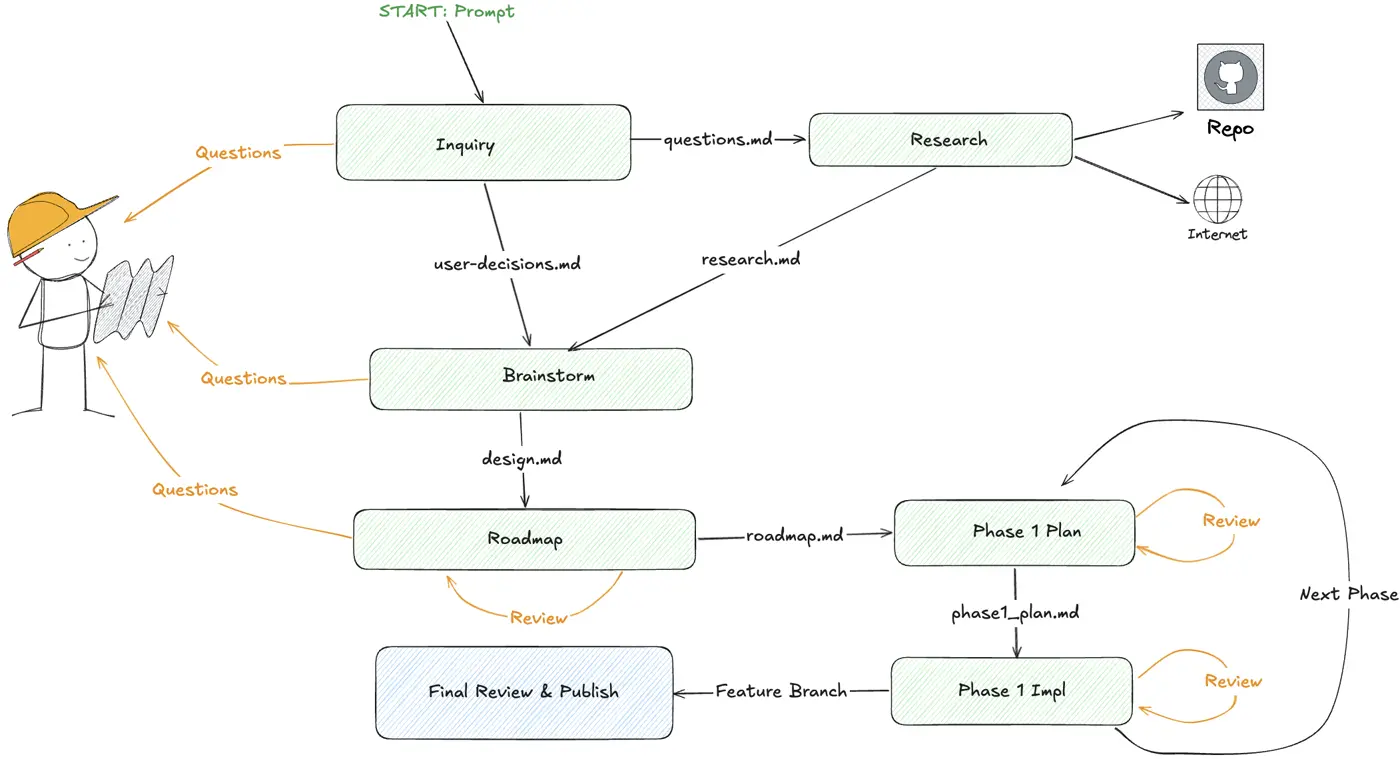
DoorDash open-source TUI that turns large feature requests into checkpointed multi-phase coding-agent workflows across Claude Code, Codex, and OpenCode.

Open-source memory-first coding agent that turns disposable coding sessions into long-lived agents with persistent memory, skills, search, and multi-channel access.
Alternative Tools to Consider

Open-source terminal coding agent with git-native edits, repo mapping, and broad model support

Open-source terminal coding agent from Mistral with subagents, slash-command skills, full-repo context, and enterprise-facing deployment paths.

Open-source coding agent for the terminal with provider-agnostic model support, built-in agents, and optional desktop/IDE surfaces.
Open-source terminal coding agent from QwenLM with Qwen-optimized workflows, provider-flexible auth, headless mode, and IDE integrations.
Do one more comparison before you commit to Zot
Strong picks usually survive one more internal check. Read deeper, compare a neighbor, then leave for the vendor page if the fit still holds.