Recall
Fully local Claude Code memory plugin that logs sessions and writes compact resume context without sending project data to an external model.
Do not bounce yet
Read the fit check, compare one alternative, then decide whether the vendor page is still your best next click.
Quick Verdict
Fast fit check before you leave the page
Make the fit call first. Vendor pages are good at selling, but they rarely tell you where the product is a bad match.
- Claude Code users who frequently restart sessions or work across long gaps
- Developers who want local-first project memory without an external summarization API
- Builders using Claude Code subscriptions who care about token efficiency and resume context
- Recall is deliberately Claude Code-specific today, so teams using Codex, Gemini CLI, OpenCode, or Cursor as peers will need a broader memory layer.
- Extractive summaries can preserve the wrong details if a session spends a long time in a bad direction, so stale memory still needs review.
- The project is young, with limited production proof beyond early GitHub and HN traction.
Compare Next
Take one more internal step before the vendor pitch
This is where visitors usually jump out too early. Read one deeper take or open one alternative so the next click is informed instead of impulsive.
Alternative profile
Claude-Mem
Open-source persistent memory layer for Claude Code and other coding agents that captures session observations, compresses them, and injects relevant context back into future work.
Alternative profile
Lore
Local memory and context-management gateway that gives Claude Code, Codex, OpenCode, Pi, and similar coding agents durable shared recall.
Alternative profile
agentmemory
Persistent cross-session memory layer for coding agents, with MCP, hooks, and shared recall across Claude Code, Codex CLI, Gemini CLI, OpenClaw, and more.
Recall is a Claude Code memory plugin for developers who want a fresh session to remember where the last one stopped without replaying a giant transcript or sending project context to another hosted model. It writes a local history.md log, condenses that into context.md, and surfaces the digest when a new Claude Code session starts.
Recall is a Claude Code plugin for developers who keep losing useful project context between sessions, compactions, and machine switches. It captures session activity into local Markdown, then uses a vendored TF-IDF plus TextRank summarizer to produce a compact context.md that Claude can load at the next session start. The important distinction is that Recall is intentionally narrow and offline: no API key, no hosted memory service, no extra summarization model, and no opaque vector store. That makes it a credible fit for vibe-coding workflows where the pain is repeated re-explanation and token waste, while the main caveat is that stale or overbroad memory still needs human discipline.
Why Choose Recall?
Choose Recall when your main pain is Claude Code cold starts and repeated project re-explanation, not cross-agent memory across an entire tool stack.
Its local TF-IDF plus TextRank summarizer is strategically different from memory products that make a second model call just to summarize what the first model did.
Plain Markdown memory is easier to inspect and delete than a black-box vector store, which matters when transcripts may contain repo paths, commands, or sensitive implementation detail.
The caveat is real: memory is only useful when it is curated enough not to preserve stale plans, failed debugging guesses, or misleading context.
Key Features
Captures Claude Code session activity into local Markdown files under a project-scoped .recall directory.
Generates a compact context.md resume file with a vendored TF-IDF plus TextRank summarizer instead of calling an external LLM.
Hooks into Claude Code session start and stop flows so a new session can choose whether to resume from saved context and continue logging.
Provides slash commands such as /recall:save, /recall:show, and /recall:log for explicit control over memory capture and review.
Adds best-effort secret redaction, confined writes, hardened git reads, and untrusted-data framing for the context that gets surfaced back to Claude.
Ships as an MIT-licensed open-source Claude Code plugin with tests, benchmarks, CI, CodeQL, and plugin manifest validation.
Pros & Cons
- Recall solves a real Claude Code workflow problem: useful project state disappears between fresh sessions unless the developer manually curates it.
- The offline summarizer is a practical trust advantage for teams that do not want repo transcripts sent to another model just to create memory.
- Plain Markdown output is inspectable, diffable, and easy to delete, which is healthier than opaque memory stores for many coding workflows.
- The project is honest about scope: it augments Claude Code rather than pretending to be a cross-agent memory platform.
- Recall is deliberately Claude Code-specific today, so teams using Codex, Gemini CLI, OpenCode, or Cursor as peers will need a broader memory layer.
- Extractive summaries can preserve the wrong details if a session spends a long time in a bad direction, so stale memory still needs review.
- The project is young, with limited production proof beyond early GitHub and HN traction.
- Because the memory files live in the repo, teams need a clear policy on whether .recall stays private, ignored, or reviewed before commit.
Detailed Use Cases for Recall
Use Recall when a project has enough moving parts that a fresh Claude Code session needs a short handoff summary before making useful changes.
Because Recall writes Markdown and avoids model-backed summarization, developers can review exactly what context will be handed back into the agent.
Recall is useful when the same project background keeps getting typed into prompts and a 1-2K token digest is enough to orient the next session.
Teams can try Recall when they want the benefits of session continuity but are not ready for a shared memory server, hosted retrieval layer, or cross-agent MCP setup.
Who Should Use Recall?
Claude Code users who frequently restart sessions or work across long gaps
Developers who want local-first project memory without an external summarization API
Builders using Claude Code subscriptions who care about token efficiency and resume context
Teams evaluating whether lightweight Markdown memory is enough before adopting heavier MCP memory infrastructure
Perfect For
Resuming a Claude Code project after a day or week away without replaying the whole prior transcript.
Keeping a lightweight, local project diary of prompts, touched files, commands, and next steps for long-running vibe-coding work.
Reducing token spend from repeated project re-explanation when a compact handoff summary is enough.
Auditing what context will be handed into the next agent session before trusting it.
Technical Details
Recall Comparisons & Alternatives
Recall review
Recall vs Claude-Mem
Recall vs agentmemory
local memory for Claude Code
Claude Code project memory plugin
offline summarizer for coding agents
Developers compare Recall with other vibe coding tools when they need a better workflow fit, not just a better landing page.
Direct Competitors
Claude-Mem
agentmemory
Lore
Planning with Files
Similar Tools You Might Like
Open-source multi-harness plugin marketplace for shipping agents, skills, commands, and workflows across Claude Code, Codex CLI, Cursor, OpenCode, Gemini CLI, and Copilot.
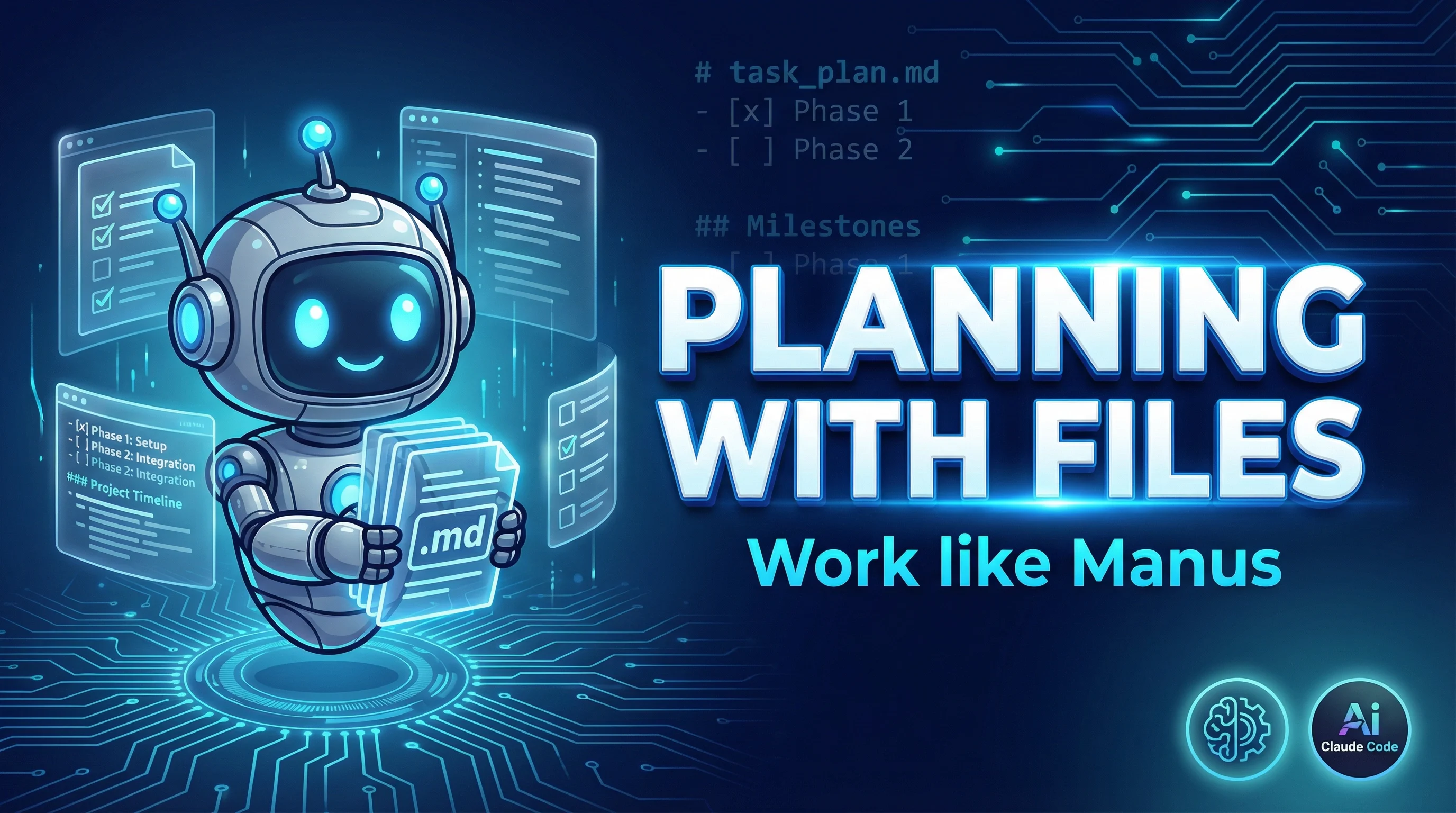
Open-source persistent planning skill and plugin for coding agents that keeps task plans, findings, and progress on disk so work survives /clear, compaction, and crashes.

Local analytics dashboard for AI coding agents that unifies sessions, costs, models, and tool usage across multiple editors.
Alternative Tools to Consider

Open-source persistent memory layer for Claude Code and other coding agents that captures session observations, compresses them, and injects relevant context back into future work.
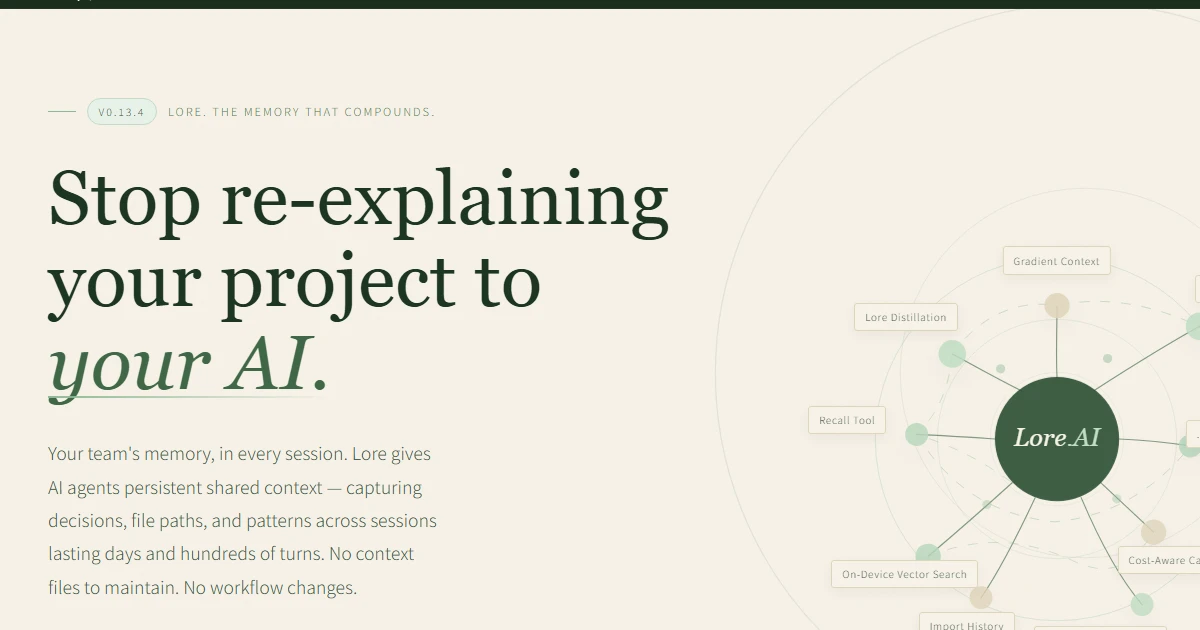
Local memory and context-management gateway that gives Claude Code, Codex, OpenCode, Pi, and similar coding agents durable shared recall.
Persistent cross-session memory layer for coding agents, with MCP, hooks, and shared recall across Claude Code, Codex CLI, Gemini CLI, OpenClaw, and more.
Open-source persistent planning skill and plugin for coding agents that keeps task plans, findings, and progress on disk so work survives /clear, compaction, and crashes.
Do one more comparison before you commit to Recall
Strong picks usually survive one more internal check. Read deeper, compare a neighbor, then leave for the vendor page if the fit still holds.