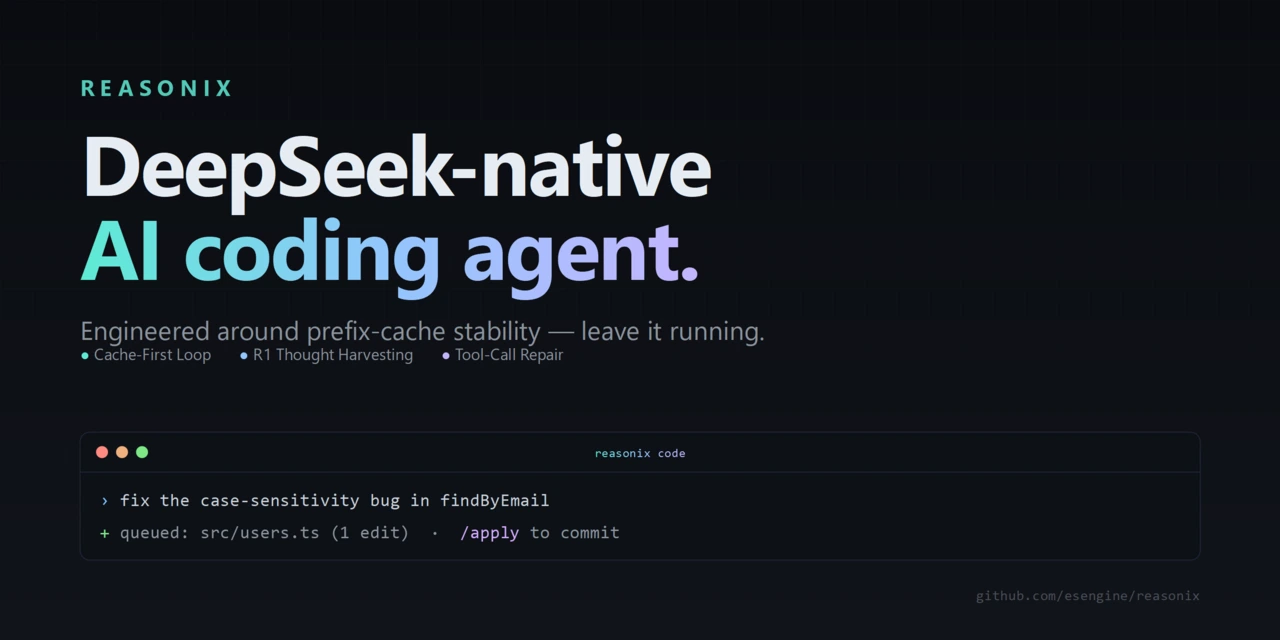
Reasonix
Open-source terminal coding agent with a native Go binary, DeepSeek-first cache-aware design, configurable providers, permissions, tools, and MCP-compatible plugins.
Do not bounce yet
Read the fit check, compare one alternative, then decide whether the vendor page is still your best next click.
Quick Verdict
Fast fit check before you leave the page
Make the fit call first. Vendor pages are good at selling, but they rarely tell you where the product is a bad match.
- Terminal-first developers who want a serious DeepSeek-first coding workflow rather than only raw model access
- Builders evaluating open-source alternatives to Claude Code, Codex, CodeWhale, Aider, or OpenCode
- Teams running longer repo sessions where token cost, context stability, and session persistence matter
- Reasonix is still DeepSeek-first, so its distinctive prefix-cache efficiency argument may matter less with unrelated providers.
- Open source does not mean zero-cost: model API usage and any external plugin services are billed separately.
- The rapid 0.x TypeScript to 1.x Go transition makes older tutorials, commands, and architecture descriptions materially stale.
Compare Next
Take one more internal step before the vendor pitch
This is where visitors usually jump out too early. Read one deeper take or open one alternative so the next click is informed instead of impulsive.
Related article
Reasonix Review 2026: Pricing, Install, OpenCode Comparison, and Tradeoffs
A practical Reasonix review covering its Go rewrite, DeepSeek-first design, installation, real pricing, strengths, limits, and alternatives such as OpenCode and CodeWhale.
Alternative profile
Claude Code Router
MIT-licensed local gateway and desktop control plane for routing Claude Code, Codex, Grok CLI, and compatible agents across model providers.
Alternative profile
Aider
Open-source terminal coding agent with git-native edits, repo mapping, and broad model support
Alternative profile
Claude Code
Agentic AI coding assistant that lives in your terminal, understands your entire codebase and automates routine tasks
Reasonix is an opinionated open-source terminal coding agent built around long sessions, explicit configuration, and cache-aware context. The current 1.x release line is a ground-up Go rewrite: DeepSeek remains the default preset and the center of its cost-efficiency thesis, but other OpenAI-compatible endpoints can now be configured without a provider-specific fork. The practical question is whether that focus fits your repositories better than a broader general-purpose agent.
Reasonix is a terminal coding agent for developers who care about long-running sessions, explicit configuration, and cache-aware context. Its current 1.x line is a ground-up Go rewrite distributed as a native binary. DeepSeek ships as the default preset, while any OpenAI-compatible endpoint can be configured without a new provider-specific code path. Providers, models, permissions, tools, and MCP-compatible plugins live in TOML configuration, and Reasonix can optionally pair separate executor and planner models. That makes it a focused open-source alternative for teams willing to trade some turnkey convenience for control over the agent harness and its operating costs.
Why Choose Reasonix?
Choose Reasonix if you want a config-driven native coding agent built around cache-aware long sessions instead of another generic wrapper.
Providers, models, permissions, tools, and MCP-compatible plugins are declared explicitly, which makes the harness more inspectable and reproducible.
DeepSeek ships as the preset, but any OpenAI-compatible endpoint can be added through configuration, with an optional planner and executor model pair.
The MIT-licensed repository, npm and Homebrew distribution, native release archives, and active 1.x cadence provide credible public maintenance signal.
Key Features
Ground-up 1.x rewrite in Go, distributed as a prebuilt native binary for macOS, Linux, and Windows on AMD64 and ARM64.
Config-driven providers, models, permissions, enabled tools, and plugins through `reasonix.toml`, with project and user configuration paths.
DeepSeek preset plus support for other OpenAI-compatible endpoints and an optional two-model executor and planner workflow.
Cache-aware context maintenance designed to preserve stable prefixes and control context growth during long sessions.
External tools run as subprocesses over an MCP-compatible stdio JSON-RPC protocol, while built-in tools register inside the binary.
Interactive and one-shot workflows, approvals, sandbox controls, checkpoints and rewind, subagent profiles, slash commands, and `@` references.
Pros & Cons
- Reasonix has a clear product thesis: optimize long coding sessions around explicit configuration, cache-aware context, and terminal control.
- The Go rewrite removes the old Node runtime requirement while npm, Homebrew, and release archives keep installation accessible.
- OpenAI-compatible provider configuration gives teams an escape hatch without diluting the well-documented DeepSeek-first default.
- The public MIT-licensed repository, detailed guides, frequent releases, and substantial GitHub traction make it more credible than a launch-day wrapper.
- Reasonix is still DeepSeek-first, so its distinctive prefix-cache efficiency argument may matter less with unrelated providers.
- Open source does not mean zero-cost: model API usage and any external plugin services are billed separately.
- The rapid 0.x TypeScript to 1.x Go transition makes older tutorials, commands, and architecture descriptions materially stale.
- Explicit TOML configuration, permission choices, plugins, and model composition require more setup than a managed editor subscription.
Detailed Use Cases for Reasonix
Reasonix is most interesting when you expect sessions to run long enough that prefix-cache hit rate and session persistence stop being theoretical details and start affecting actual operating cost.
Providers, models, permissions, tools, plugins, and optional planner/executor pairs are defined in TOML rather than hidden behind a hosted account.
npm, Homebrew, and GitHub release archives cover macOS, Linux, and Windows on AMD64 and ARM64 without requiring the legacy TypeScript runtime.
Compare Reasonix with CodeWhale, Claude Code, Codex, Aider, and OpenCode on the same repository, model class, permissions, and API budget.
Who Should Use Reasonix?
Terminal-first developers who want a serious DeepSeek-first coding workflow rather than only raw model access
Builders evaluating open-source alternatives to Claude Code, Codex, CodeWhale, Aider, or OpenCode
Teams running longer repo sessions where token cost, context stability, and session persistence matter
Operators who want configurable permissions, tools, MCP-compatible plugins, and model composition in a local coding-agent loop
Perfect For
Long-running terminal coding sessions where DeepSeek prefix caching and cost discipline actually matter.
Teams that want providers, models, permissions, tools, and MCP-compatible plugins declared in versionable configuration.
Developers who want an open-source CLI alternative to Claude Code or Codex with support for OpenAI-compatible endpoints.
Automation that benefits from one-shot commands, a native cross-platform binary, checkpoints, and optional planner/executor model pairs.
Technical Details
Reasonix Comparisons & Alternatives
Reasonix review
DeepSeek Reasonix review
Reasonix vs OpenCode
Reasonix vs CodeWhale
DeepSeek-native coding agent
cache-first terminal coding agent
Developers compare Reasonix with other vibe coding tools when they need a better workflow fit, not just a better landing page.
Direct Competitors
CodeWhale
Claude Code
OpenAI Codex
Aider
OpenCode
Similar Tools You Might Like
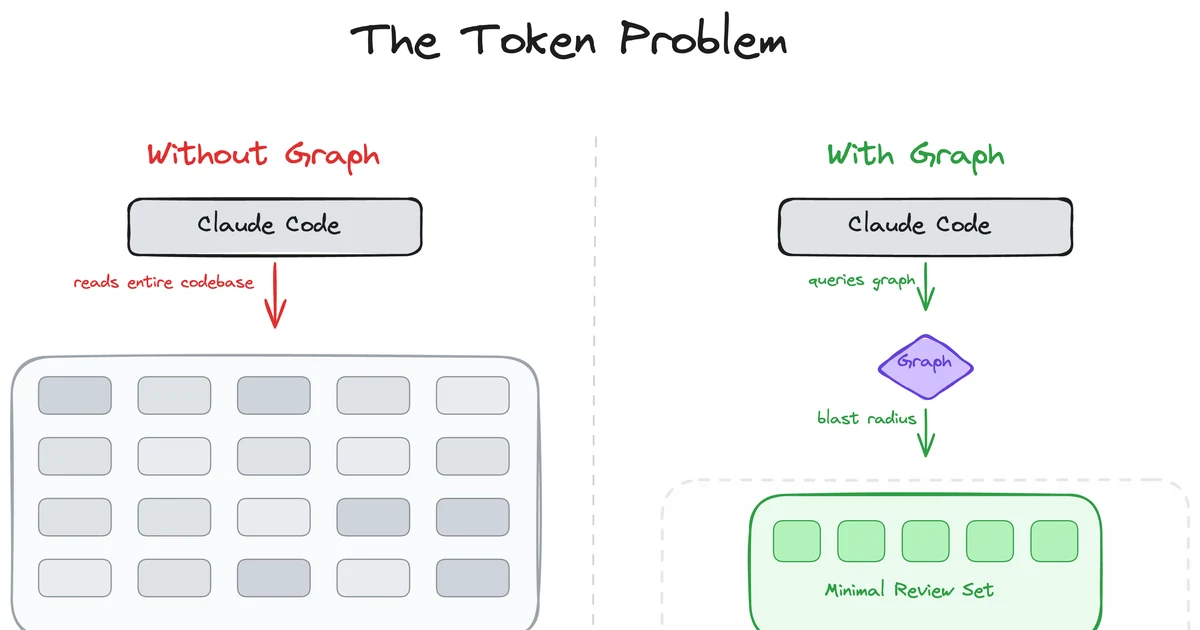
MIT-licensed local code-intelligence graph that gives Claude Code, Codex, Cursor, Copilot, and other MCP clients targeted review context.
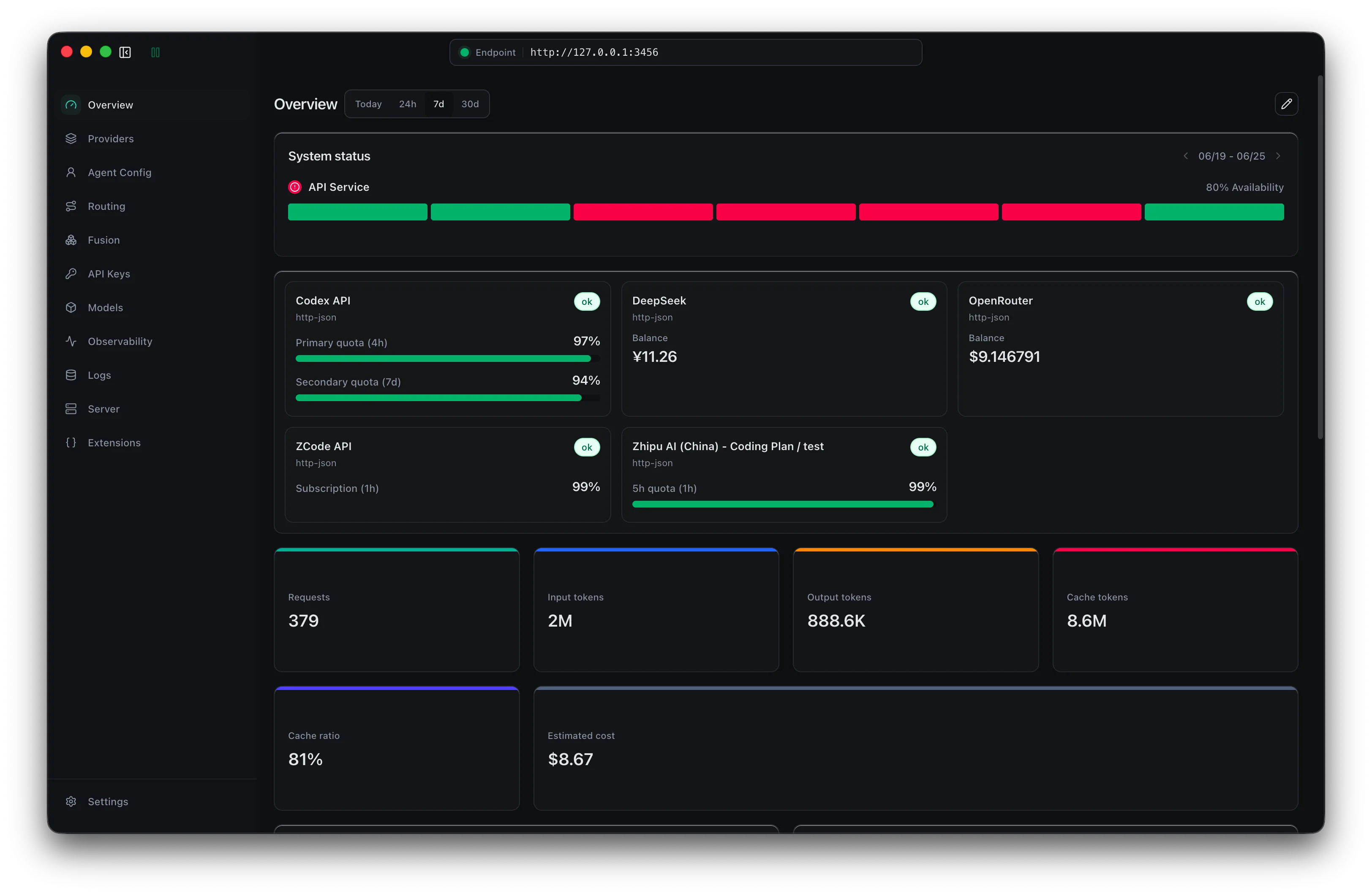
MIT-licensed local gateway and desktop control plane for routing Claude Code, Codex, Grok CLI, and compatible agents across model providers.

Rust-based coding-agent harness with a native TUI, multi-session workflows, agent memory, swarm coordination, MCP, browser tooling, and broad model-provider support.
Alternative Tools to Consider
MIT-licensed local gateway and desktop control plane for routing Claude Code, Codex, Grok CLI, and compatible agents across model providers.

Open-source terminal coding agent with git-native edits, repo mapping, and broad model support
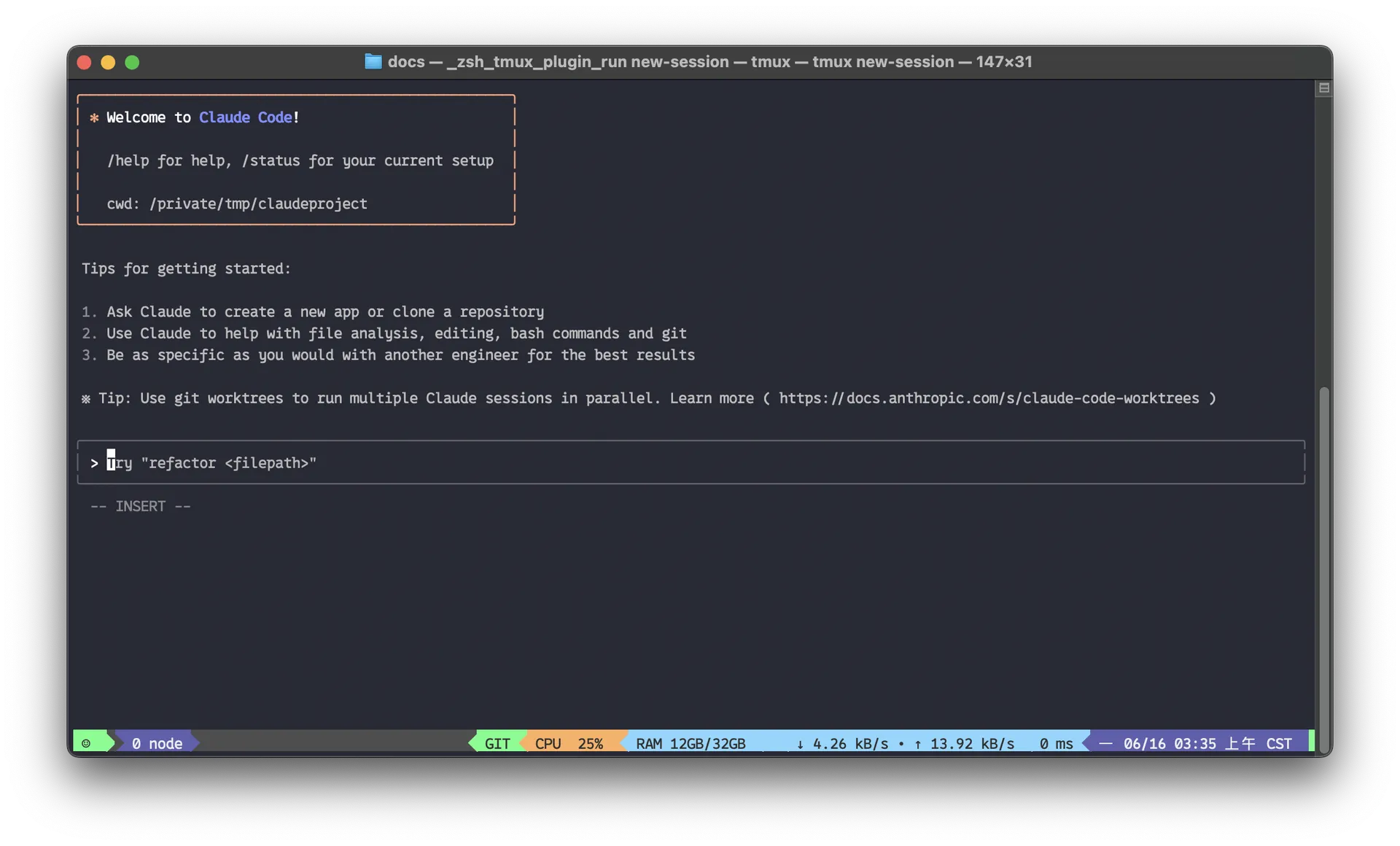
Agentic AI coding assistant that lives in your terminal, understands your entire codebase and automates routine tasks

Beautiful chat interface for Claude Code right inside VS Code, no terminal required

Open-source terminal dashboard for tracking Claude Code token usage, burn rate, and predicted session cutoffs.
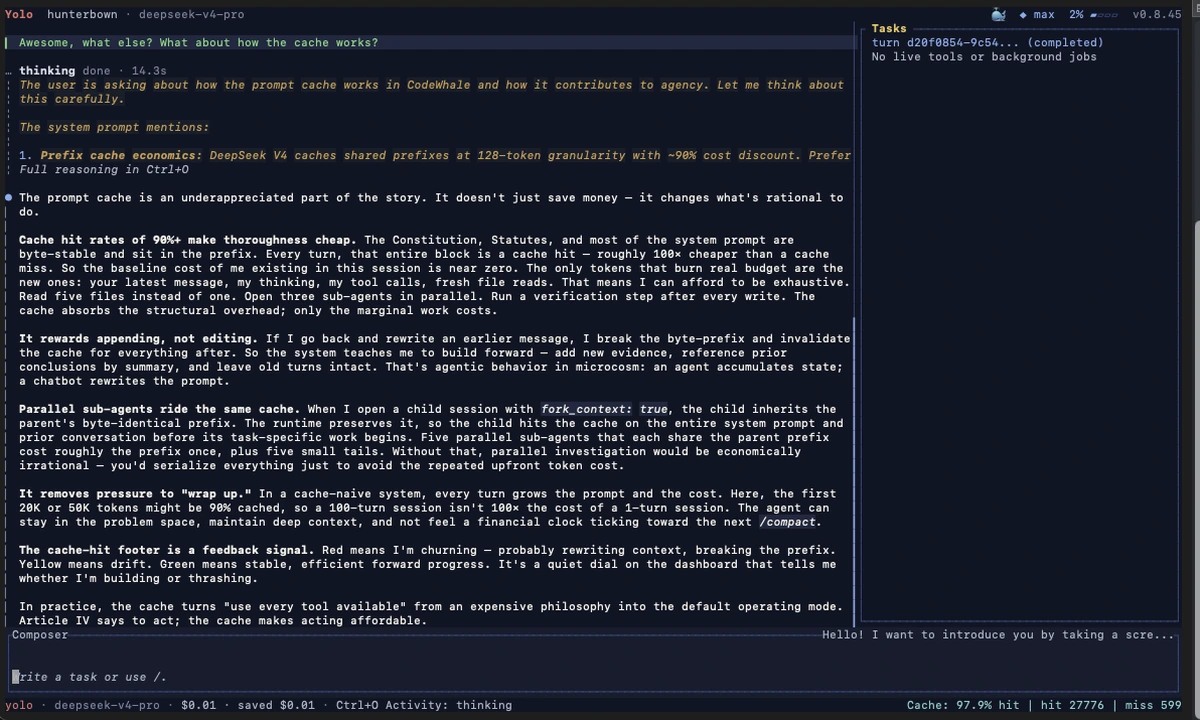
Open-source terminal coding agent formerly known as DeepSeek TUI, with Plan/Agent/YOLO modes, MCP support, subagents, LSP diagnostics, and a headless runtime API.
Do one more comparison before you commit to Reasonix
Strong picks usually survive one more internal check. Read deeper, compare a neighbor, then leave for the vendor page if the fit still holds.