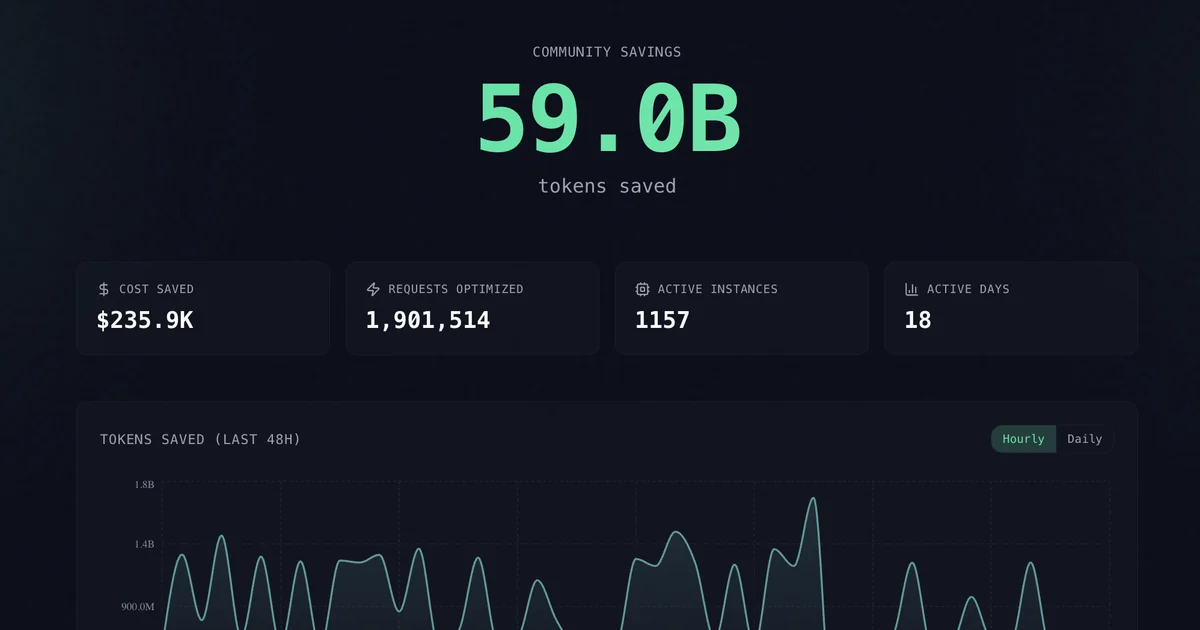
Headroom
Apache-2.0 context-compression layer that wraps Claude Code, Codex, Cursor, OpenCode, and MCP clients so agents send fewer tool-output and history tokens.
Do not bounce yet
Read the fit check, compare one alternative, then decide whether the vendor page is still your best next click.
Quick Verdict
Fast fit check before you leave the page
Make the fit call first. Vendor pages are good at selling, but they rarely tell you where the product is a bad match.
- Developers using Claude Code, Codex, Cursor, OpenCode, Cline, Continue, Aider, or similar tools on large repositories
- Teams spending meaningful money on coding-agent token usage and looking for local-first optimization before switching models
- Agent infrastructure builders who need a proxy, SDK, or MCP layer for content-aware compression
- Compression can still remove details that matter for debugging, security review, or subtle code reasoning if teams trust it blindly
- Runtime setup is heavier than a pure prompt convention because wrappers, proxy settings, MCP config, and optional ML dependencies must behave correctly
- Public HN discussion is much weaker than the GitHub star count, so independent production evidence is still thin
Compare Next
Take one more internal step before the vendor pitch
This is where visitors usually jump out too early. Read one deeper take or open one alternative so the next click is informed instead of impulsive.
Alternative profile
ctx
Open-source local CLI that indexes coding-agent transcripts from Claude Code, Codex, Cursor, OpenCode, Gemini CLI, Copilot CLI, and related harnesses for cited history search.
Alternative profile
Claude-Mem
Open-source persistent memory layer for Claude Code and other coding agents that captures session observations, compresses them, and injects relevant context back into future work.
Alternative profile
LoopX
MIT-licensed loop-engineering state kernel and local control plane for keeping Codex, Claude Code, Cursor, and peer agent teams on long-running goals.
Headroom is worth tracking because serious vibe coding now has a context-cost problem. Coding agents read files, logs, test output, search results, docs, and previous turns before they write useful code. Headroom sits between those verbose inputs and the model so teams can compress context while keeping originals locally retrievable.
Headroom is a local-first context compression layer for AI agents and LLM applications. Instead of letting coding agents forward raw tool outputs, logs, files, RAG chunks, and long conversation history directly to the model, it sits in front of the provider as a Python/TypeScript library, OpenAI/Anthropic-compatible proxy, MCP server, or one-command agent wrapper. Its content-aware pipeline routes JSON, source code, prose, image, and history payloads through specialized compressors, keeps originals retrievable through CCR, stabilizes provider cache prefixes, and exposes savings telemetry. That makes it relevant to vibe-coding teams using Claude Code, Codex, Cursor, Aider, OpenCode, Cline, Continue, Goose, OpenHands, OpenClaw, and similar tools where agent costs and context bloat are now operational problems.
Why Choose Headroom?
Choose Headroom when your agent workflow is expensive because the model keeps ingesting raw tool outputs, logs, files, RAG chunks, and long session history.
The strongest fit is a developer or team already using Claude Code, Codex, Cursor, OpenCode, Cline, Continue, Aider, Goose, OpenHands, or OpenClaw and looking for an infrastructure layer rather than another agent UI.
The reversible CCR design matters because it lets the agent retrieve originals on demand instead of depending entirely on lossy summaries.
Do not treat token savings as proof of correctness. Teams should benchmark accuracy, latency, cache behavior, and failure-open behavior on their own repositories before routing important work through compression.
Key Features
Local-first compression layer for tool outputs, logs, files, RAG chunks, source code, images, and conversation history before they reach the LLM
Multiple integration modes: Python library, TypeScript SDK, OpenAI/Anthropic-compatible proxy, MCP server, and agent wrappers
One-command wrapping for Claude Code, Codex, Copilot CLI, Aider, OpenCode, Cline, Continue, Goose, OpenHands, OpenClaw, Mistral Vibe, and ZCode
ContentRouter, SmartCrusher, CodeCompressor, Kompress-v2-base, image compression, and cache-prefix alignment for content-aware token reduction
CCR reversible compression that keeps originals locally retrievable instead of permanently throwing context away
Cross-agent memory, failure-session learning, savings dashboard, doctor/perf commands, and output-token shaping controls
Pros & Cons
- Targets a real cost center in agentic coding: verbose tool output and long session history often dominate model input
- Works as infrastructure around existing agents rather than forcing teams to switch coding assistants
- Local-first design and Apache-2.0 source make it easier to inspect than hosted-only compression services
- Reversible retrieval is a stronger posture than lossy summarization when agents may need original evidence later
- Compression can still remove details that matter for debugging, security review, or subtle code reasoning if teams trust it blindly
- Runtime setup is heavier than a pure prompt convention because wrappers, proxy settings, MCP config, and optional ML dependencies must behave correctly
- Public HN discussion is much weaker than the GitHub star count, so independent production evidence is still thin
- Savings dashboards and benchmark claims need local validation against task accuracy, latency, cache behavior, and retrieval failures
Detailed Use Cases for Headroom
Use Headroom when tests, grep output, logs, API responses, and file reads are bloating every agent turn before the model sees the actual task.
The proxy path is useful when you want OpenAI- or Anthropic-compatible traffic to pass through compression with minimal application changes.
Headroom can expose compression, retrieval, and stats tools to MCP clients so agents can shrink context while still recovering originals.
The cross-agent memory direction is useful when Claude Code, Codex, OpenCode, and related harnesses need to reuse compressed local context instead of rediscovering it every session.
Who Should Use Headroom?
Developers using Claude Code, Codex, Cursor, OpenCode, Cline, Continue, Aider, or similar tools on large repositories
Teams spending meaningful money on coding-agent token usage and looking for local-first optimization before switching models
Agent infrastructure builders who need a proxy, SDK, or MCP layer for content-aware compression
Engineering leads comparing context-management tools such as RTK, lean-ctx, ctx, Claude-Mem, and provider-native compaction
Perfect For
Reducing token spend for Claude Code, Codex, Cursor, OpenCode, and other coding agents that repeatedly read logs, tests, files, and search results
Putting an OpenAI/Anthropic-compatible proxy in front of existing agent traffic without rewriting application code
Giving MCP-capable agents a reversible context-compression and retrieval tool instead of relying only on conversation compaction
Sharing compressed memory and failure learnings across multiple local agent harnesses on the same developer machine
Technical Details
Headroom Comparisons & Alternatives
Headroom review
Headroom vs RTK
Headroom vs lean-ctx
Headroom vs ctx
Headroom for Codex
Headroom for Claude Code
context compression for coding agents
MCP compression server
Developers compare Headroom with other vibe coding tools when they need a better workflow fit, not just a better landing page.
Direct Competitors
RTK
lean-ctx
ctx
Claude-Mem
Similar Tools You Might Like
MIT-licensed loop-engineering state kernel and local control plane for keeping Codex, Claude Code, Cursor, and peer agent teams on long-running goals.
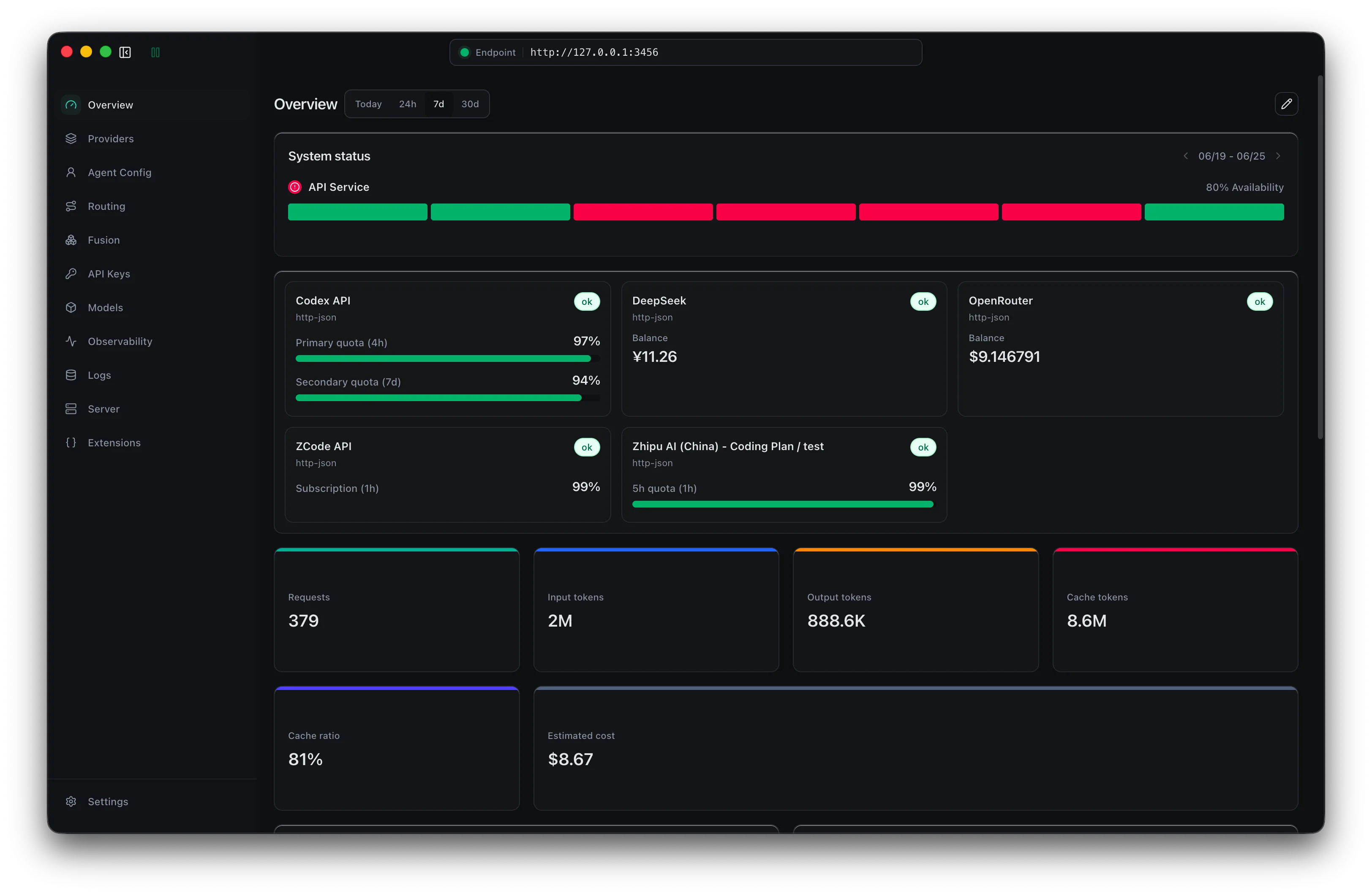
MIT-licensed local gateway and desktop control plane for routing Claude Code, Codex, Grok CLI, and compatible agents across model providers.

Rust-based coding-agent harness with a native TUI, multi-session workflows, agent memory, swarm coordination, MCP, browser tooling, and broad model-provider support.
Alternative Tools to Consider
Open-source local CLI that indexes coding-agent transcripts from Claude Code, Codex, Cursor, OpenCode, Gemini CLI, Copilot CLI, and related harnesses for cited history search.

Open-source persistent memory layer for Claude Code and other coding agents that captures session observations, compresses them, and injects relevant context back into future work.
Do one more comparison before you commit to Headroom
Strong picks usually survive one more internal check. Read deeper, compare a neighbor, then leave for the vendor page if the fit still holds.