Understand Anything
Open-source codebase knowledge graph plugin and dashboard that helps coding agents and humans understand repository structure, business logic, and onboarding flows.
Do not bounce yet
Read the fit check, compare one alternative, then decide whether the vendor page is still your best next click.
Quick Verdict
Fast fit check before you leave the page
Make the fit call first. Vendor pages are good at selling, but they rarely tell you where the product is a bad match.
- Developers onboarding into large unfamiliar repositories
- Teams using coding agents that need stronger codebase understanding and impact analysis
- Technical leads who want architecture and business-flow visibility without hand-maintained diagrams
- Initial full-repo analysis can be token-heavy on larger codebases, so the onboarding benefit is not free if you rely on paid hosted models.
- Knowledge-graph UIs can still become visually noisy on very large systems, even when the product is doing more than a generic graph screenshot demo.
- The strongest experience depends on generating and maintaining graph artifacts, which adds another moving part to the repo workflow.
Compare Next
Take one more internal step before the vendor pitch
This is where visitors usually jump out too early. Read one deeper take or open one alternative so the next click is informed instead of impulsive.
Alternative profile
Claude-Mem
Open-source persistent memory layer for Claude Code and other coding agents that captures session observations, compresses them, and injects relevant context back into future work.
Alternative profile
Context7
Documentation context layer that feeds up-to-date, version-specific library docs and code snippets into Cursor, Claude, and other coding agents.
Alternative profile
Repomix
Open-source CLI and MCP tool that packs whole repositories into AI-friendly formats so coding agents can reason over real codebases with less setup friction.
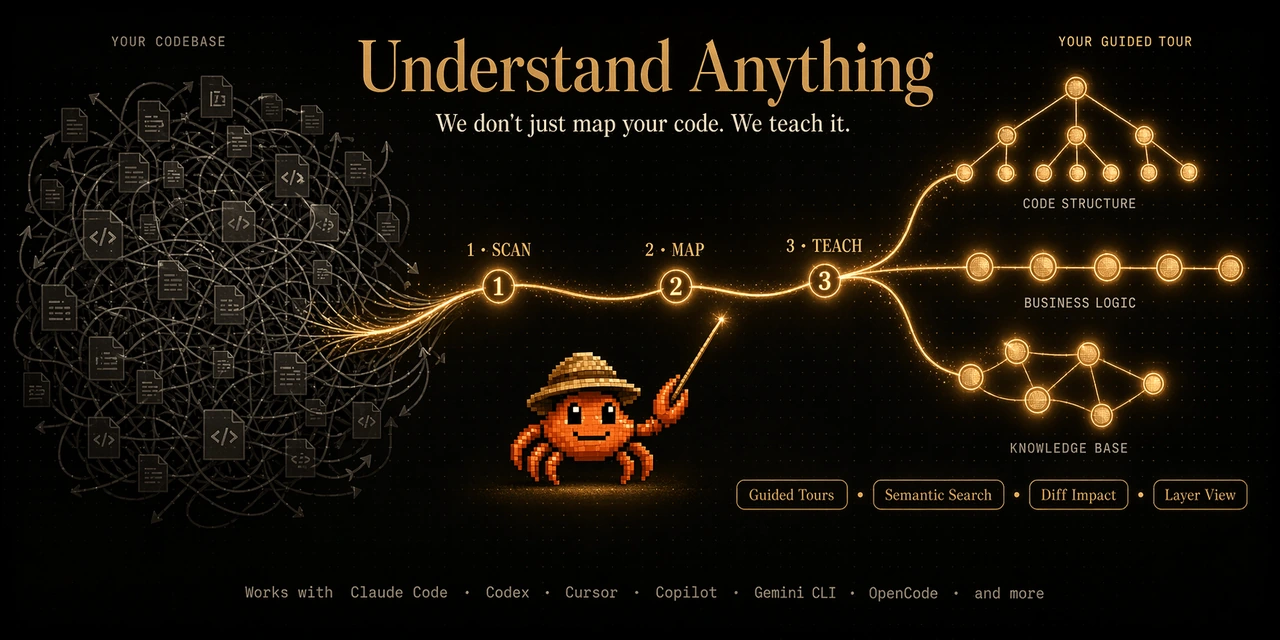
Understand Anything is for developers who are tired of pretending that faster code generation automatically means faster understanding. Instead of flattening a repository into another context blob, it analyzes the codebase with a multi-agent pipeline, builds an interactive knowledge graph, and lets you inspect structure, business logic, onboarding tours, and change impact from a dashboard that works across multiple coding-agent ecosystems.
Understand Anything is a defensible vibe-coding addition because it attacks a real bottleneck: most agent workflows can generate code faster than they can actually explain a living codebase. The project analyzes repositories with a multi-agent pipeline, builds an interactive knowledge graph across files, functions, dependencies, and business-domain flows, then exposes guided tours, semantic search, diff impact analysis, and dashboard exploration. Because it ships with installation paths for Claude Code, Codex, OpenCode, Gemini CLI, Copilot, and related environments, it fits serious agent-coding workflows that need codebase understanding and onboarding rather than another shallow codegen wrapper.
Why Choose Understand Anything?
Choose Understand Anything when the actual problem is codebase comprehension and onboarding, not squeezing one more autocomplete trick out of your editor.
Its business-logic and guided-tour views matter because most repo graph tools show structure without teaching meaning.
The compatibility story across Claude Code, Codex, OpenCode, Gemini CLI, Copilot, Cursor, and related environments makes it more useful than a single-platform plugin.
Because the project ships a live demo and public open-source repo, you can judge the workflow on substance instead of launch-thread theater.
Key Features
Analyze repositories with a multi-agent pipeline that builds a knowledge graph spanning files, functions, classes, imports, and dependencies instead of just dumping raw context into a prompt.
Switch between structural code views and business-domain views so the same graph can explain architecture, flows, and process steps rather than only source-level edges.
Offer guided tours, fuzzy and semantic search, diff impact analysis, layer visualization, and plain-English explanations directly inside the interactive dashboard.
Support installation paths for Claude Code, Codex, OpenCode, Gemini CLI, Copilot, Cursor, OpenClaw, and other agent environments instead of locking the workflow to one IDE shell.
Handle knowledge bases and Karpathy-style LLM wikis in addition to code repositories, which makes it more useful for mixed code-and-doc onboarding work.
Ship as an MIT-licensed open-source project with a live demo and public repo activity rather than hiding the product behind a waitlist.
Pros & Cons
- Understand Anything is solving a real comprehension problem, not pretending another code generator magically replaces architecture understanding.
- The guided-tour and business-logic views make it more teachable for onboarding than tools that only flatten a repo into text blobs.
- Multi-platform install paths across Claude Code, Codex, OpenCode, Gemini CLI, and Copilot make the tool unusually compatible with real agent stacks.
- The live demo and active public repo give you something concrete to evaluate before trusting it in a workflow.
- Initial full-repo analysis can be token-heavy on larger codebases, so the onboarding benefit is not free if you rely on paid hosted models.
- Knowledge-graph UIs can still become visually noisy on very large systems, even when the product is doing more than a generic graph screenshot demo.
- The strongest experience depends on generating and maintaining graph artifacts, which adds another moving part to the repo workflow.
- This is more about understanding, onboarding, and impact awareness than inline code editing speed, so teams looking for a pure editor copilot may mis-evaluate it.
Detailed Use Cases for Understand Anything
Use Understand Anything when a repo is large enough that reading files sequentially is stupid, and you need a guided way to grasp structure, relationships, and business meaning.
Its domain and flow views are useful when dependency graphs alone do not explain how the system actually works for customers or internal teams.
Guided tours, semantic search, and plain-English node explanations make it more useful for learning than static diagrams or raw repo packers.
Diff impact analysis is relevant when you want a better sense of ripple effects before merging work in a fast-moving codebase.
Who Should Use Understand Anything?
Developers onboarding into large unfamiliar repositories
Teams using coding agents that need stronger codebase understanding and impact analysis
Technical leads who want architecture and business-flow visibility without hand-maintained diagrams
Builders managing mixed code-and-doc knowledge bases that benefit from graph exploration and guided tours
Perfect For
Onboarding developers or agents into a large unfamiliar repository without forcing them to read code blindly file by file.
Explaining architecture, business flows, and system relationships to humans who need more than a raw dependency graph.
Checking likely blast radius with diff impact analysis before landing changes in a fast-moving codebase.
Turning code-plus-doc knowledge bases into searchable interactive graphs for mixed engineering and product understanding.
Technical Details
Understand Anything Comparisons & Alternatives
Understand Anything review
Understand Anything vs Repomix
Understand Anything vs Context7
codebase knowledge graph for Claude Code and Codex
interactive repo onboarding tool for AI coding agents
diff impact analysis knowledge graph
Developers compare Understand Anything with other vibe coding tools when they need a better workflow fit, not just a better landing page.
Direct Competitors
Repomix
Context7
Claude-Mem
MNGR
Similar Tools You Might Like

Open-source CLI and MCP tool that packs whole repositories into AI-friendly formats so coding agents can reason over real codebases with less setup friction.

Local analytics dashboard for AI coding agents that unifies sessions, costs, models, and tool usage across multiple editors.

Open-source persistent memory and dependency-aware task graph for coding agents that need durable context across long-running repo work.
Alternative Tools to Consider

Open-source persistent memory layer for Claude Code and other coding agents that captures session observations, compresses them, and injects relevant context back into future work.

Documentation context layer that feeds up-to-date, version-specific library docs and code snippets into Cursor, Claude, and other coding agents.
Open-source CLI and MCP tool that packs whole repositories into AI-friendly formats so coding agents can reason over real codebases with less setup friction.
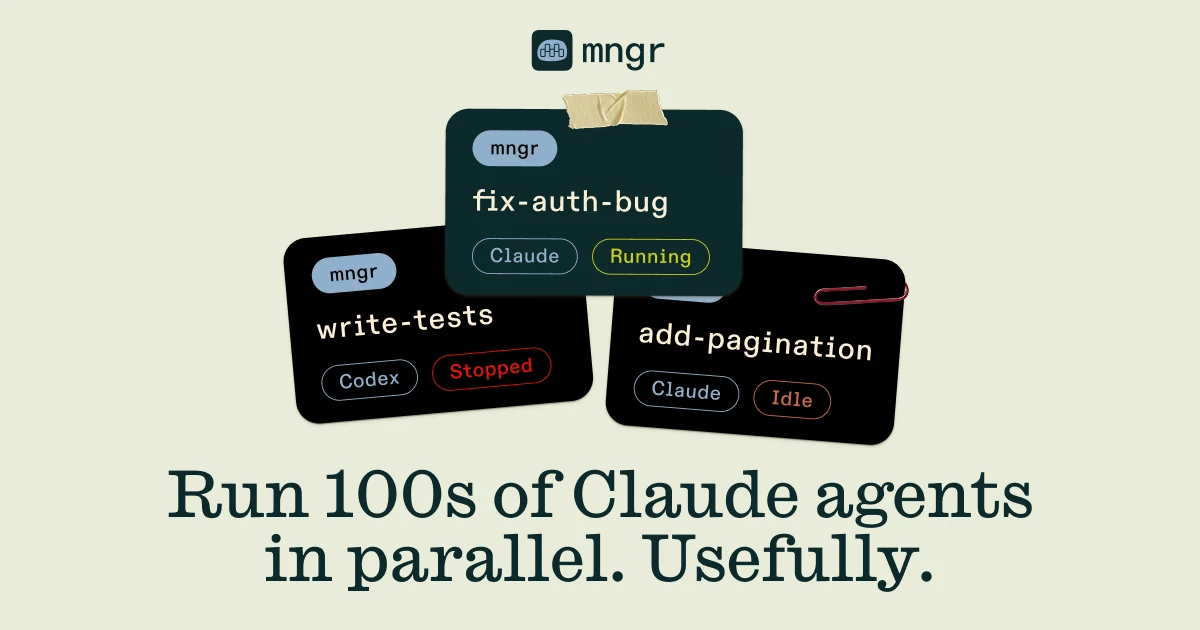
Unix-style CLI for managing coding agents across local machines, containers, remote hosts, and structured execution environments.
Do one more comparison before you commit to Understand Anything
Strong picks usually survive one more internal check. Read deeper, compare a neighbor, then leave for the vendor page if the fit still holds.