Haystack
AI pull-request review queue that triages agent-generated PRs and surfaces the ones that actually need human attention.
Do not bounce yet
Read the fit check, compare one alternative, then decide whether the vendor page is still your best next click.
Quick Verdict
Fast fit check before you leave the page
Make the fit call first. Vendor pages are good at selling, but they rarely tell you where the product is a bad match.
- Engineering teams already shipping more AI-generated code than their review process comfortably handles
- Tech leads who want to reserve human review for risky or poorly verified pull requests
- Developers comparing Haystack vs CodeRabbit or Qodo for review-time quality control
- This is an early proprietary product, so there is less long-term adoption proof than more established review platforms.
- Repository access plus coding-agent conversation access raises real security and privacy questions that teams should review carefully.
- The value proposition is strongest for teams already suffering from high PR volume; smaller teams may find it overbuilt.
Compare Next
Take one more internal step before the vendor pitch
This is where visitors usually jump out too early. Read one deeper take or open one alternative so the next click is informed instead of impulsive.
Alternative profile
CodeRabbit
AI code review platform for pull requests, IDEs, and the CLI, built to catch bugs and keep fast-moving agentic teams from merging sloppy changes.
Alternative profile
Qodo
AI code review platform for pull requests, local IDE workflows, issue resolution, and rules enforcement.
Alternative profile
Optio
MIT-licensed self-hosted AI engineering platform that runs Claude Code, Codex, Copilot, Gemini, and OpenCode agents in Kubernetes from tickets to PRs.
Haystack is an AI code review product built for a very specific modern problem: agentic coding can produce far more pull requests than a team can review thoughtfully. Instead of asking humans to stare at every diff, Haystack tries to decide which pull requests are safe, which need fixes, and which truly deserve scarce human attention.
Haystack is a web-based AI code review product aimed at the new problem created by vibe coding: teams can generate far more pull requests than humans can review carefully. Instead of starting from raw diffs, Haystack analyzes the pull request, surrounding codebase, and the coding-agent conversation behind the change, then routes the work into safe-to-merge, needs-fixes, or needs-human-review buckets. That positioning makes it more interesting than another generic copilot because it is focused on preserving reviewer attention when agent output volume starts breaking normal GitHub review flows.
Why Choose Haystack?
Choose Haystack if your team is not struggling to generate code but is struggling to review the flood of pull requests created by coding agents.
It is more interesting than a generic PR summarizer because it is explicitly trying to reallocate reviewer attention, not just paraphrase diffs.
The use of coding-agent conversation history makes it more aligned with vibe coding workflows than review tools that only look at code changes.
The free tier makes it testable without immediately committing to an enterprise procurement cycle.
Key Features
Queue-based PR triage that routes changes into safe-to-merge, needs-fixes, or needs-human-review buckets instead of treating every pull request the same.
Review context built from the diff, the surrounding codebase, and the coding-agent conversation that produced the change.
Summaries that emphasize the PR goal, design decisions, and verification evidence so reviewers can reason about behavior before drowning in raw diff lines.
A workflow designed to preserve scarce human reviewer attention for sensitive, under-verified, or architecturally important changes.
Agent-style follow-up flows and paid-plan cloud sandbox support for teams that want more than a passive summary layer.
Free-tier access for individual evaluation before a team commits to changing its review process.
Pros & Cons
- Haystack attacks a real 2026 bottleneck: coding agents can produce PR volume faster than humans can review it well.
- The product is more opinionated than a generic PR summarizer because it explicitly decides which changes deserve human attention.
- Using coding-agent conversation traces as review input is more relevant to vibe coding than reviewing diffs in isolation.
- The free tier and public HN launch make it easier to evaluate than enterprise-only review theater.
- This is an early proprietary product, so there is less long-term adoption proof than more established review platforms.
- Repository access plus coding-agent conversation access raises real security and privacy questions that teams should review carefully.
- The value proposition is strongest for teams already suffering from high PR volume; smaller teams may find it overbuilt.
- The Haystack name collides with other developer products, which can create discovery confusion.
Detailed Use Cases for Haystack
Use Haystack when your team has reached the point where reviewing every agent-generated pull request line by line is cognitively stupid and operationally expensive.
Haystack is useful when you want automation to catch obvious problems and reserve human reviewers for architectural, product, or risk-sensitive decisions.
The workflow is especially relevant when your team wants to know whether authors actually validated behavior instead of trusting an LLM to sound confident.
Reviewers can start from the purpose of the PR, the design decisions made, and the verification trail rather than brute-forcing their way through long diffs first.
Who Should Use Haystack?
Engineering teams already shipping more AI-generated code than their review process comfortably handles
Tech leads who want to reserve human review for risky or poorly verified pull requests
Developers comparing Haystack vs CodeRabbit or Qodo for review-time quality control
Organizations experimenting with coding agents and trying to stop review fatigue from becoming the next bottleneck
Perfect For
Triage-heavy review queues where agent-generated pull requests are arriving faster than humans can deeply inspect them.
Routing sensitive billing, auth, onboarding, or otherwise risky changes toward human review while letting low-risk work move faster.
Checking whether the PR author actually verified behavior instead of only producing plausible-looking code and tests.
Giving reviewers a faster mental model of intent, architecture, and validation evidence before they open long diffs.
Technical Details
Haystack Comparisons & Alternatives
Haystack review
Haystack pricing
Haystack vs CodeRabbit
Haystack vs Qodo
AI PR triage tool
AI code review for agent-generated pull requests
Developers compare Haystack with other vibe coding tools when they need a better workflow fit, not just a better landing page.
Direct Competitors
CodeRabbit
Qodo
GitHub code review
Greptile
Similar Tools You Might Like
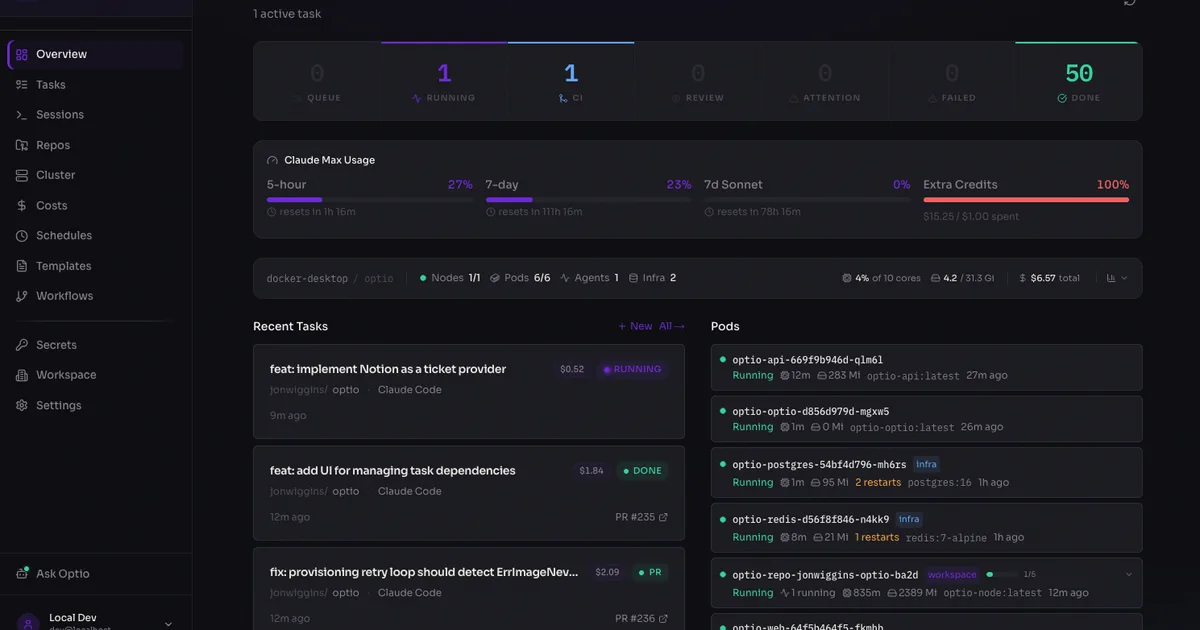
MIT-licensed self-hosted AI engineering platform that runs Claude Code, Codex, Copilot, Gemini, and OpenCode agents in Kubernetes from tickets to PRs.

Cloud-executed AI software engineer that takes repository tasks from prompt to tested diff and pull request.

Agent-native software development workspace for delegating refactors, migrations, incident response, and other repo tasks across IDE, CLI, browser, and chat.
Alternative Tools to Consider

AI code review platform for pull requests, IDEs, and the CLI, built to catch bugs and keep fast-moving agentic teams from merging sloppy changes.

AI code review platform for pull requests, local IDE workflows, issue resolution, and rules enforcement.
Do one more comparison before you commit to Haystack
Strong picks usually survive one more internal check. Read deeper, compare a neighbor, then leave for the vendor page if the fit still holds.